
Switchboard Upgrades in Adelaide
If your switchboard still has rewireable ceramic fuses, has no safety switches, trips regularly, or is so full there's nowhere to add a circuit, it's due. We replace it with a properly sized board on RCBOs and label it so it makes sense to whoever opens it next.
Signs Your Switchboard Needs Upgrading
Most of the housing across Modbury, Hope Valley, Holden Hill, St Agnes and Banksia Park went up between the 1960s and the 1980s, and a large share of it's still on the original board. These are the things that tell you it's time:
- Rewireable ceramic fuses, the ones with fuse wire you replace by hand
- No safety switches at all, or one RCD covering only the power points
- Breakers that trip often, especially when the kettle and the toaster are both on
- A board with no spare ways, so nothing new can be added
- Scorch marks, heat discolouration, a burning smell or a warm board door
- Buzzing or crackling from inside the board
- A board that has never been touched since the house was built
- An asbestos-backed panel, common in boards from roughly the 1960s and 70s
What a Modern Board Actually Gives You
The real upgrade isn't the box, it's what goes in it. We fit RCBOs, which combine a circuit breaker and a safety switch in one device, on each circuit.
That matters for two reasons. The first is protection: every circuit gets shock protection, including the lighting circuits, which older installations almost never had. The second is practical: when something faults, one circuit drops out instead of half the house, and you know immediately which one because it's labelled.
The alternative arrangement, one or two shared RCDs covering groups of circuits, is cheaper but noticeably worse to live with. A faulty toaster takes out the fridge, the lights and the alarm at the same time, and finding which appliance caused it becomes a job in itself.
You also get capacity. A correctly sized board has spare ways in it, which is what makes it possible to add an EV charger, a split system, a pool pump or a renovated kitchen later without starting again.
What's Involved on the Day
A standard domestic switchboard upgrade is usually a full day, and the power is off for a decent chunk of it. We let you know the timing in advance so you can plan around the fridge and anyone working from home.
The work involves isolating the supply, removing the old board, mounting and wiring the new one, transferring and terminating every circuit, testing each one, and labelling the lot. Where the existing enclosure is sound and big enough we can sometimes reuse it, but on older installations a new enclosure is usually the sensible call.
Every circuit gets tested at the end: insulation resistance, earth continuity, polarity, and an RCD trip test with a calibrated instrument. You get a Certificate of Compliance for Electrical Work, which is your record that it was done by a licensed electrician and verified. Keep it, because it matters when you sell and when an insurer asks.
What We Sometimes Find Behind the Board
On houses from the 1960s and 70s, taking the old board off occasionally reveals wiring that isn't in good shape. Rubber-insulated cable from that era goes brittle with age and the insulation can break away when it's disturbed.
We tell you that possibility exists before we start rather than after. If it turns up, we show you, explain what it means, and price the options. What we won't do is quietly wire a new board onto cable that shouldn't be reused.
That said, the common assumption that an old board means a full rewire is usually wrong. Most of the time the board is the urgent part and the existing wiring tests fine. If someone quotes you a whole-house rewire without testing first, get a second opinion.
What Drives the Price
We aren't going to publish a headline figure that turns into something else once we're on site. What we'll do is tell you exactly what moves the number, so you can see where your job is likely to sit before you call.
- The number of circuits, since every circuit needs its own RCBO and its own termination
- Whether the existing enclosure can be reused or a new one is needed
- Whether the board is being replaced in place or relocated, which means extending every circuit
- The condition of the main earth and the earthing arrangement, which often needs upgrading at the same time
- Whether an asbestos-backed panel is present, since that changes how the removal has to be handled
- Any consumer mains or metering work required alongside it
Quotes are free, fixed, and state what's included and excluded. If we think something might turn up once we open things up, you hear about it before we start rather than on the invoice.
Call 0435 006 420Where We Do This Work
We service all of Adelaide. Being based in Wynn Vale, these are the suburbs we're in most often and where we can usually get to you fastest. Pick yours for local detail, and if you are somewhere else in the metro area, just call and ask.
Common Questions About Switchboard Upgrades
It depends mainly on the circuit count, whether the enclosure is being reused, and the condition of the earthing. A small house with six circuits and a sound enclosure is a very different job to a larger home needing a new enclosure and an earthing upgrade. We quote a fixed price after looking at it, and we flag anything that might turn up before we start.
Most domestic upgrades are a single day, with the power off for a good part of it. Larger homes or jobs that include relocating the board or upgrading the consumer mains can run into a second day. We tell you which before booking.
An existing installation that complied when it was installed is generally allowed to remain, so there's usually no standing obligation to upgrade an untouched board. But once significant work is done on the installation, the new work has to meet current standards, which in practice usually means safety switch protection. And regardless of obligation, a board with no RCDs leaves you with no shock protection at all.
An RCD detects current leaking to earth and cuts the supply, which is what protects a person from a shock. A circuit breaker protects the wiring from overload and short circuit. An RCBO is both in one device, fitted per circuit. Fitting RCBOs across the board is why a fault only takes out the one circuit rather than everything sharing a single RCD.
Usually not. In most houses the board is the urgent part and the existing cabling tests fine. Full rewires are the exception. We test rather than assume, and we'll only recommend one if the results actually support it.
Sometimes, if there's space and the board is otherwise sound. On an old fuse board it's often not the better option, because you end up with one shared RCD that trips the whole house on any fault. We'll price both and explain the difference so you can decide.
Yes. A Certificate of Compliance for Electrical Work on every job that requires one, plus test results. It's your proof the work was done by a licensed electrician and verified, and you want it on file for insurance and for when you sell.
Related Services
Safety Switches & RCD Testing
Proper trip-time testing with a calibrated instrument, not just pushing the button on the board.
Read moreEV Charger Installation
Home wall chargers on a dedicated circuit, with the right protection and the board capacity checked first.
Read moreEmergency Electrician
Lost power, tripping breakers, burning smells or sparking outlets. Call and we'll tell you straight whether it can wait.
Read more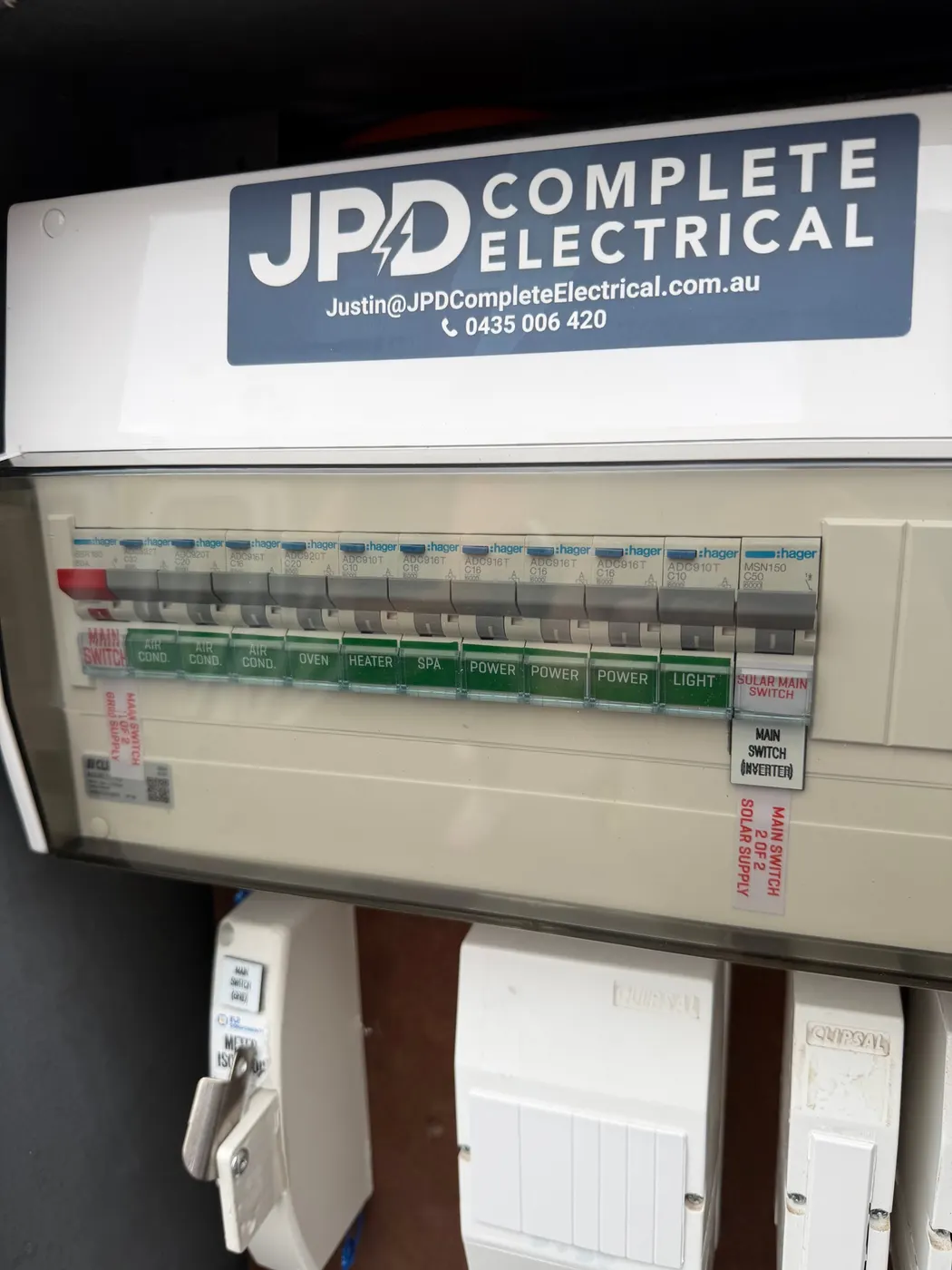
Recent Work
Real Switchboard Upgrades jobs from around Adelaide, with photos and what was actually involved.
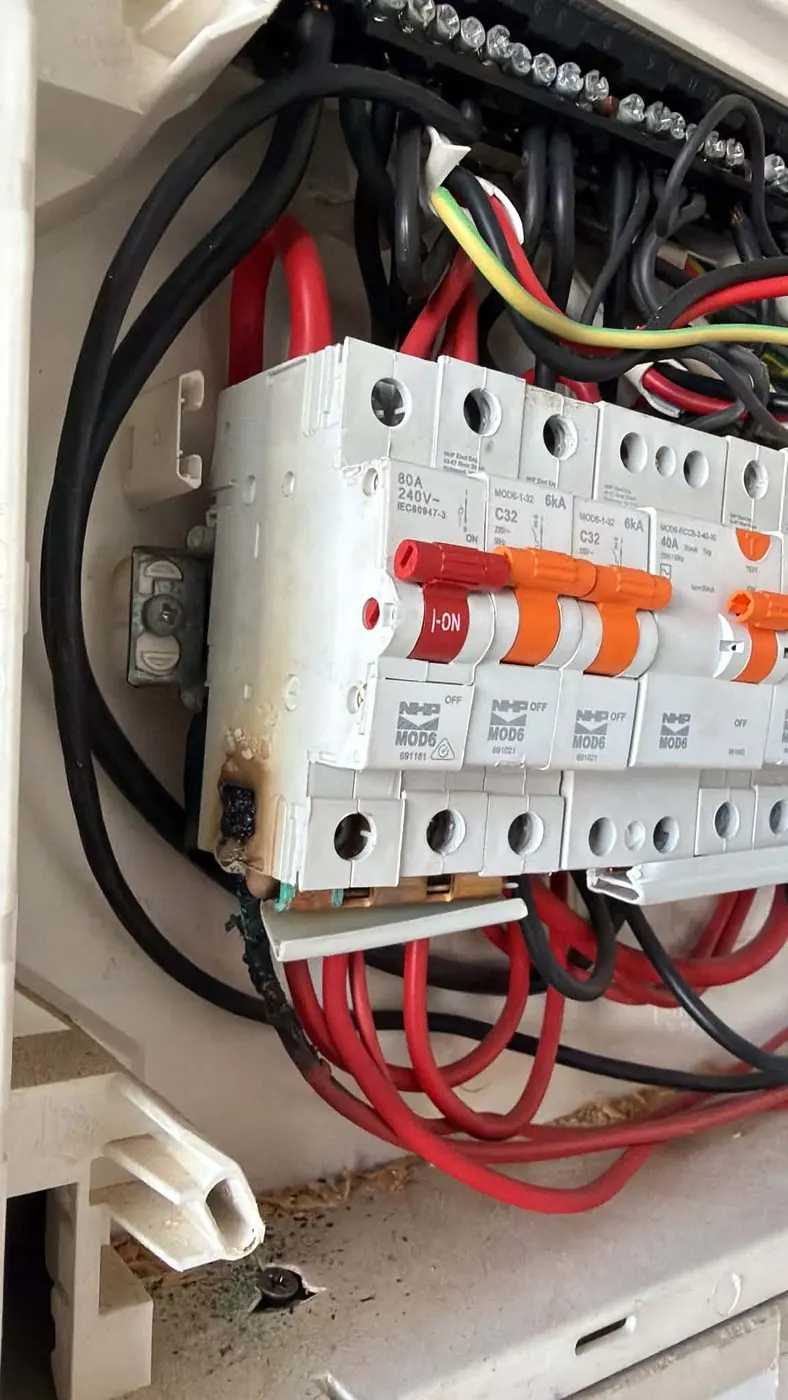
A Burnt Main Switch in Tea Tree Gully
The board was modern and tidy. Behind the cover the main switch was charred, from a loose connection left behind by an earlier solar install.
Read the job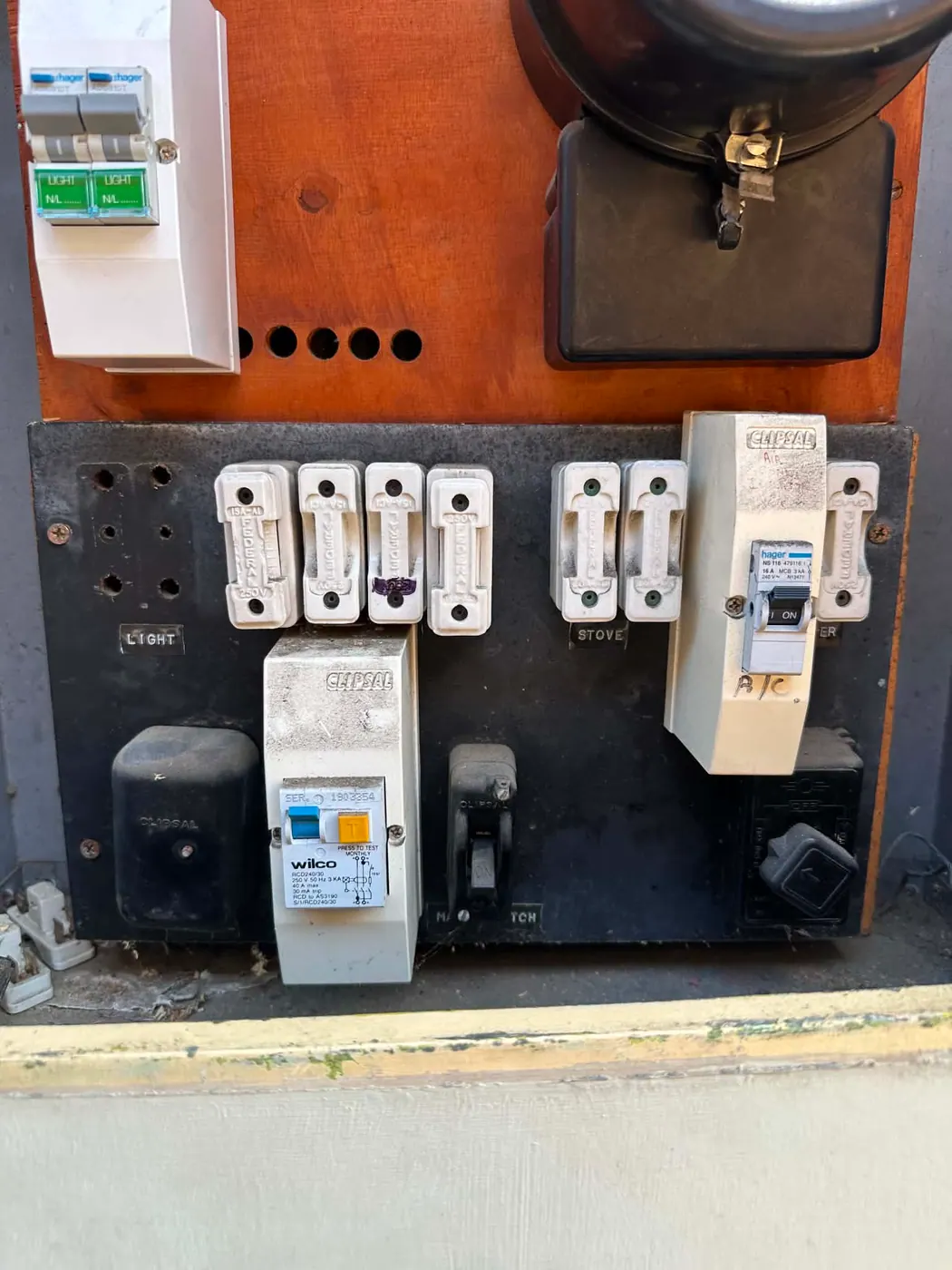
Switchboards That Need Upgrading Around Golden Grove
Rewireable fuses, one safety switch covering a whole house, and hand-written labels. Three real boards and what each one tells you.
Read the job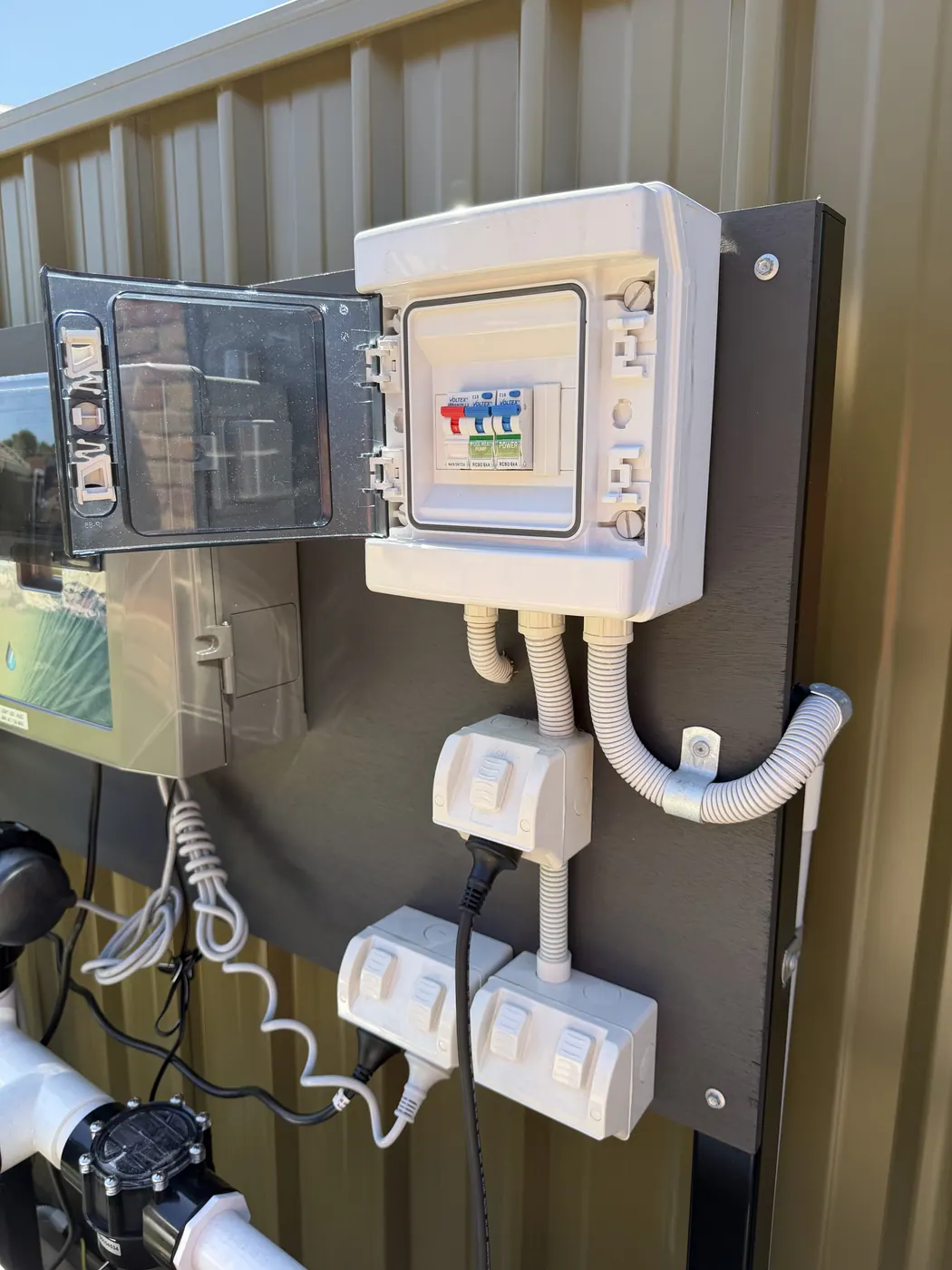
Weatherproof Pool Subboard in Golden Grove
A subboard at the pool end rather than four long runs back to the house, in an enclosure rated to live outside permanently.
Read the jobGet a Free Quote
Owner-operated, licensed and insured. Justin quotes the job, does the job, and answers the phone afterwards.