
EV Charger Installation, Adelaide
We install home wall chargers on a dedicated circuit with the protection the standard requires. The charger is the easy part. The job is making sure your switchboard can actually carry it alongside everything else in the house.
Why the Switchboard Comes First
A typical single-phase home charger draws 32 amps continuously for hours at a time. That's a bigger sustained load than almost anything else in a house, and it's nothing like the short bursts a kettle or a microwave puts on the system.
So before we talk about where the charger goes, we look at the board. What's the main switch rated at, what's the consumer mains cable, how much is already connected, and is there physical space for another circuit. In Greenwith and Golden Grove, where a lot of homes already have ducted air conditioning, an induction cooktop and a pool pump, that check genuinely matters.
On older boards in Hope Valley, Modbury or Holden Hill, the honest answer is often that the board needs replacing before a charger goes on it. We would rather tell you that upfront than install a charger onto something that shouldn't be carrying it.
Where the existing supply is tight, load management is often the answer rather than a supply upgrade. Most modern chargers can throttle their draw based on what the rest of the house is using, which lets you charge at full speed most of the time and back off automatically when the aircon and the oven are both running.
What a Proper Install Includes
A home charger install is a dedicated circuit run from the switchboard to the charger, sized for the load and the distance, with protection appropriate to EV charging.
- A dedicated circuit, not a shared one, sized for the charger and the cable run length
- RCD protection suitable for EV charging, which means a Type B, or a Type A where the charger itself provides 6 mA DC fault detection
- A correctly rated circuit breaker and, where needed, additional board capacity
- The charger mounted where the cable actually reaches the car without stretching across a walkway
- Notification to SA Power Networks where that's required for the installation
- Full testing and a Certificate of Compliance for Electrical Work
Three-Phase, Single-Phase and Charging Speed
Most homes in our area are single phase, which caps a wall charger at around 7 kW. In practical terms that adds roughly 40 kilometres of range per hour, so an overnight charge covers far more than a normal day of driving. For the vast majority of households, single phase is genuinely enough.
If you already have three-phase supply, a three-phase charger can go up to around 22 kW where the vehicle supports it. Worth knowing: plenty of EVs only accept single-phase AC charging regardless of what the charger can deliver, so a three-phase charger doesn't automatically mean faster charging for your particular car. Check the vehicle before spending the extra.
Upgrading a single-phase property to three phase purely for charging is rarely worth it. It's a significant cost and it usually solves a problem you don't have.
Where to Put It
The two things that decide placement are where the car actually parks and where the charge port is on the vehicle. A charger mounted on the wrong side of a double garage means running the cable around the car every single time, which gets old fast.
Cable run length from the switchboard is the other factor, and it's the main thing that moves the price. A charger on the garage wall directly behind the board is a short run. A charger at a detached garage down a Fairview Park or Vista block is a long run in bigger cable, and sometimes trenching.
Outdoors, the charger needs to be rated for it and positioned where it isn't going to be in the weather more than it has to be. We'll walk the site with you before quoting rather than guessing from a photo.
What Drives the Price
We aren't going to publish a headline figure that turns into something else once we're on site. What we'll do is tell you exactly what moves the number, so you can see where your job is likely to sit before you call.
- Distance from the switchboard to the charger, which drives the cable size and the labour
- Whether the run is through a roof space, through walls, or needs trenching to a detached garage
- Whether the existing switchboard has capacity and space, or needs upgrading first
- Single-phase versus three-phase installation
- The charger unit itself, if you want us to supply it rather than supplying your own
- Any load management or metering requirements
Quotes are free, fixed, and state what's included and excluded. If we think something might turn up once we open things up, you hear about it before we start rather than on the invoice.
Call 0435 006 420Where We Do This Work
We service all of Adelaide. Being based in Wynn Vale, these are the suburbs we're in most often and where we can usually get to you fastest. Pick yours for local detail, and if you are somewhere else in the metro area, just call and ask.
Common Questions About EV Charger Installation
The install cost is driven mostly by the cable run from the switchboard to the charger and whether the board has room for the circuit. A short run onto a board with spare capacity is at the lower end. A long run to a detached garage on a full 1990s board that also needs upgrading is at the higher end. We quote after seeing it, because the difference between those two is large enough that a phone estimate would be dishonest.
No. Hardwired EV charging equipment is electrical work and has to be installed by a licensed electrician, with the correct protection and a Certificate of Compliance. Beyond the legal side, the sustained load involved isn't something to guess at.
EV charging equipment generally needs to be notified to SA Power Networks, and we handle that as part of the install. Requirements can change, so we confirm what applies at the time rather than working off what was true last year.
Often yes, but it needs checking rather than assuming. We look at the main switch rating, the consumer mains, what's already connected, and whether there's physical space for another circuit. If it won't carry it, we'll tell you what it would take, and load management is frequently a cheaper answer than a supply upgrade.
Only if you already have three-phase supply and your vehicle can actually accept three-phase AC charging. Plenty of EVs are limited to single-phase AC regardless of the charger, so check the car first. Upgrading a single-phase house to three phase just for charging is rarely worth the cost.
A 7 kW single-phase charger adds roughly 40 km of range per hour, so a normal overnight charge covers well over a typical day of driving. For most households that's more than enough and the faster options solve a problem that doesn't exist.
Yes, provided it's a unit approved for sale and use in Australia. Tell us the model before we quote, because the protection requirements and the circuit sizing depend on what the specific charger needs.
Related Services
Switchboard Upgrades
Old fuses out, RCBOs in. Shock protection on every circuit and room to add what you want next.
Read morePowerpoints & Extra Circuits
New outlets run properly from the board, plus dedicated circuits for the appliances that keep tripping things.
Read moreSafety Switches & RCD Testing
Proper trip-time testing with a calibrated instrument, not just pushing the button on the board.
Read moreRecent Work
Real EV Charger Installation jobs from around Adelaide, with photos and what was actually involved.
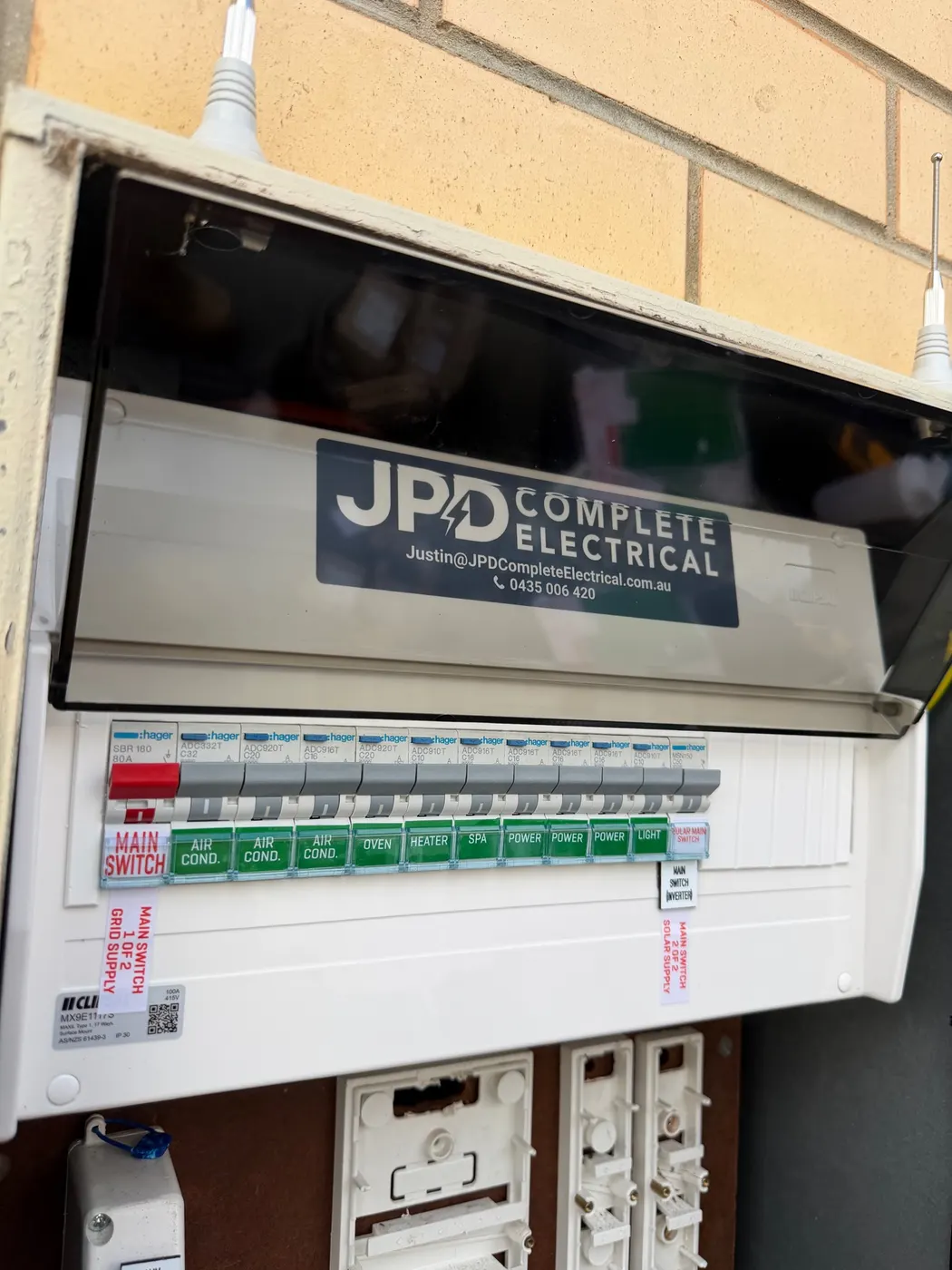
Making Board Room for an EV Charger in Ridgehaven
The board was full, so the charger had nowhere to go. Seventeen ways went in, and the charger circuit now has somewhere to land.
Read the job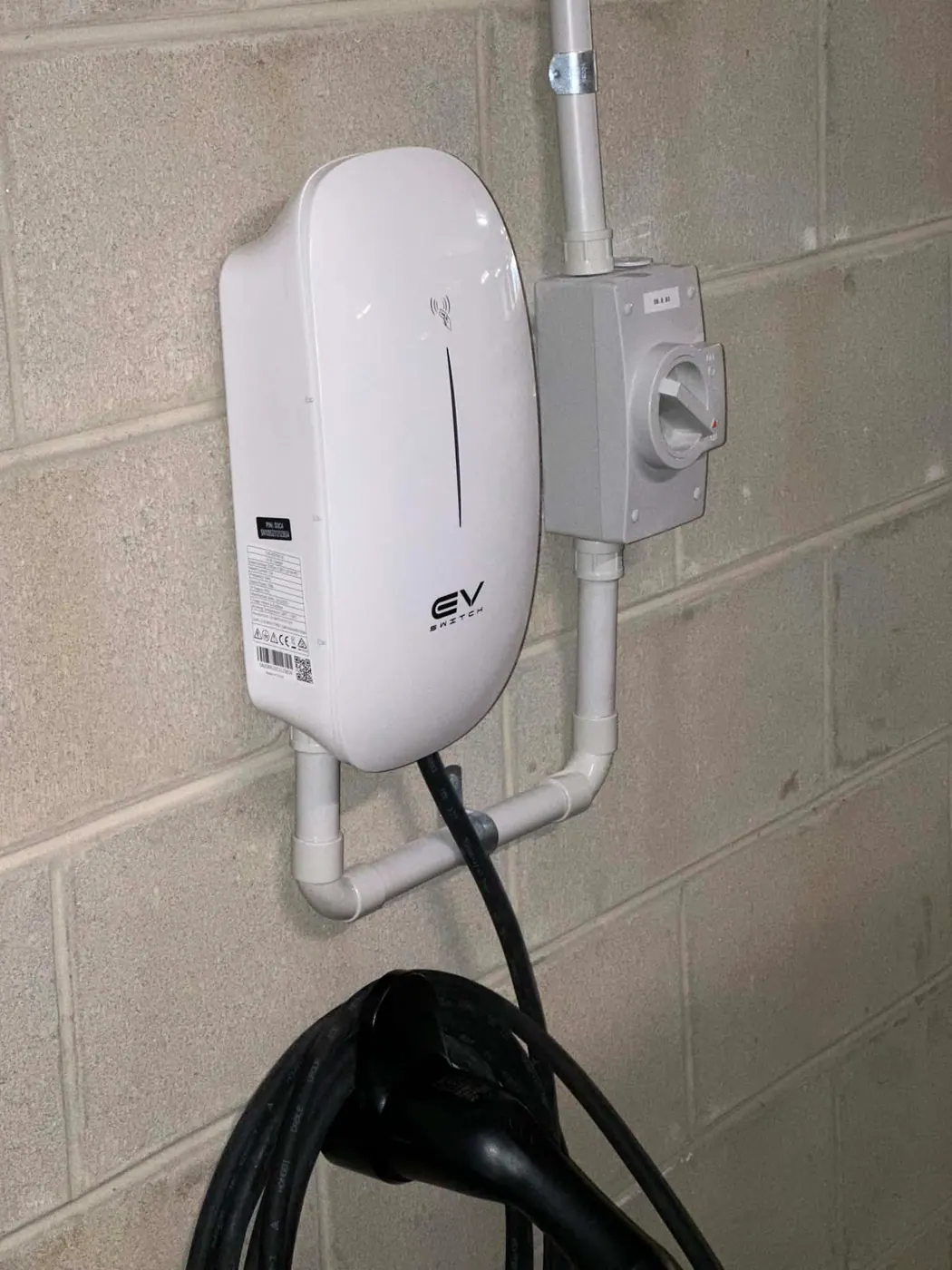
EV Charger Install in a Greenwith Apartment Car Park
A 7 kW charger on its own dedicated circuit in a multi-level residential car park, where the wiring, the supply and the permissions all work differently to a house.
Read the jobGet a Free Quote
Owner-operated, licensed and insured. Justin quotes the job, does the job, and answers the phone afterwards.