
LED Downlight Installation, Adelaide
We install LED downlights and replace old halogens across Adelaide's north-east. We change the whole fitting, not just the globe, which is the version that actually saves you money and takes the heat out of your ceiling.
Why Halogen Downlights Are Worth Replacing
A halogen downlight draws around 50 watts and converts most of that into heat. Thirty of them in a house is 1,500 watts of lighting load and a ceiling space that gets genuinely hot when everything is on.
The heat is the real issue. Halogen fittings need clearance from insulation, which is why so many homes across Golden Grove, Greenwith and Gulfview Heights have insulation pulled back in a ring around every light. Those gaps are exactly where your heating and cooling escapes, so you paid for insulation and then cut holes in it.
An LED downlight does the same job on somewhere between 7 and 12 watts, runs cool, and where the fitting is rated for it, the insulation can sit right over the top. You get the lighting, the insulation works properly, and the running cost drops by roughly 80 per cent.
Replace the Fitting, Not the Globe
You can buy an LED globe that fits an existing halogen can. We don't recommend it and we'll tell you why.
The old can is still there, so the insulation clearance requirement is still there, and the transformer feeding it's still a halogen transformer that may not run an LED cleanly. That combination is where flickering, buzzing and early failure come from. You have spent money and solved one problem out of three.
Replacing the complete fitting gives you a modern LED downlight with an integrated driver, rated for insulation contact where appropriate, with a proper beam angle and a consistent colour temperature across the house. It costs more up front and it's the version that actually works.
Getting the Layout Right
The most common mistake in a downlight job is treating it as a grid exercise. Evenly spaced lights across a ceiling give you flat, shadowless light and hot spots on the floor where nobody needs them.
Better is to light what people actually use. Downlights positioned over benches, in front of wardrobes, along walkways and washing the walls rather than lighting the middle of the room. In a kitchen that usually means a line above the bench edge rather than centred on the ceiling, so you aren't standing in your own shadow while chopping.
Colour temperature matters too. Around 3000K is warm and suits living areas and bedrooms. Around 4000K is neutral and works in kitchens, laundries and garages. Mixing them across an open-plan area looks like a mistake, so we agree the plan before we start cutting holes.
Dimming, Done Properly
LED dimming is where a lot of jobs come unstuck. Not every LED downlight is dimmable, and of the ones that are, not all of them work with every dimmer. The wrong combination gives you flicker, buzzing, a limited dimming range, or lights that won't go below half.
We match the dimmer to the fitting rather than fitting whatever is in the van. If you want dimming, tell us at quote stage so the fittings we specify actually support it.
One thing worth knowing: replacing halogens with LEDs on an existing dimmer often won't work, because old dimmers were built for a much higher minimum load. That dimmer usually needs replacing along with the lights.
What Drives the Price
We aren't going to publish a headline figure that turns into something else once we're on site. What we'll do is tell you exactly what moves the number, so you can see where your job is likely to sit before you call.
- The number of downlights and whether they're replacements in existing holes or new positions
- Whether there's accessible roof space above, since a raked ceiling or a second storey is a much bigger job
- The fittings themselves, which vary a lot in quality, and whether you want dimmable
- Whether existing halogen transformers need removing from the ceiling space
- Whether dimmers need replacing to suit the new fittings
- Any patching required if new positions mean cutting into a finished ceiling
Quotes are free, fixed, and state what's included and excluded. If we think something might turn up once we open things up, you hear about it before we start rather than on the invoice.
Call 0435 006 420Where We Do This Work
We service all of Adelaide. Being based in Wynn Vale, these are the suburbs we're in most often and where we can usually get to you fastest. Pick yours for local detail, and if you are somewhere else in the metro area, just call and ask.
Common Questions About Downlights & LED Lighting
It depends on the count, the fittings you choose, and whether we can work from the roof space. A straight swap in a single-storey home with accessible roof space is the cheapest scenario. New positions, raked ceilings or upstairs rooms with no access above cost more. We quote per job after a look.
You can, but we don't recommend it. The old can and transformer stay in place, so you keep the insulation clearance requirement and often get flickering or buzzing from the mismatch between an old halogen transformer and an LED lamp. Replacing the complete fitting is the version that actually solves the problem.
A halogen downlight is around 50 watts and an equivalent LED is roughly 7 to 12. That's about an 80 per cent reduction on your lighting load. In a house with thirty downlights running four hours a day, the difference is noticeable on the bill and immediate.
Over fittings specifically rated and marked for insulation contact, yes. Not all LED downlights are, so it depends on the product. It's one of the main reasons to change the whole fitting rather than the globe, because it lets the insulation be laid continuously instead of cut around every light.
Around 3000K for living areas and bedrooms, which reads as warm. Around 4000K for kitchens, laundries, bathrooms and garages, which reads neutral and shows detail better. Some fittings are switchable so you can decide on site. Avoid mixing temperatures within one open-plan space.
Usually yes, but it's a harder job than a standard single-storey ceiling because there may be no accessible space above. Fitting depth and cable routing become the constraints. We'll tell you upfront if a particular position isn't practical rather than promising it and discovering otherwise.
Almost always a dimmer mismatch, or an LED lamp left running on an old halogen transformer. Old dimmers were designed for a much higher minimum load than LEDs draw. The fix is matching the dimmer to the fittings, which is why we specify both together.
Related Services
Feature Lighting & LED Strip
Coves, under-bench, stair and joinery lighting, wired with the driver somewhere you can actually reach it.
Read moreCeiling Fan Installation
Fans installed on existing points or new ones, with a wall control instead of a remote that goes missing.
Read moreRenovation Electrical
Kitchens, bathrooms, extensions and whole-home renovations. Rough-in, fit-off, and decisions made before the plaster.
Read moreRecent Work
Real Downlights & LED Lighting jobs from around Adelaide, with photos and what was actually involved.
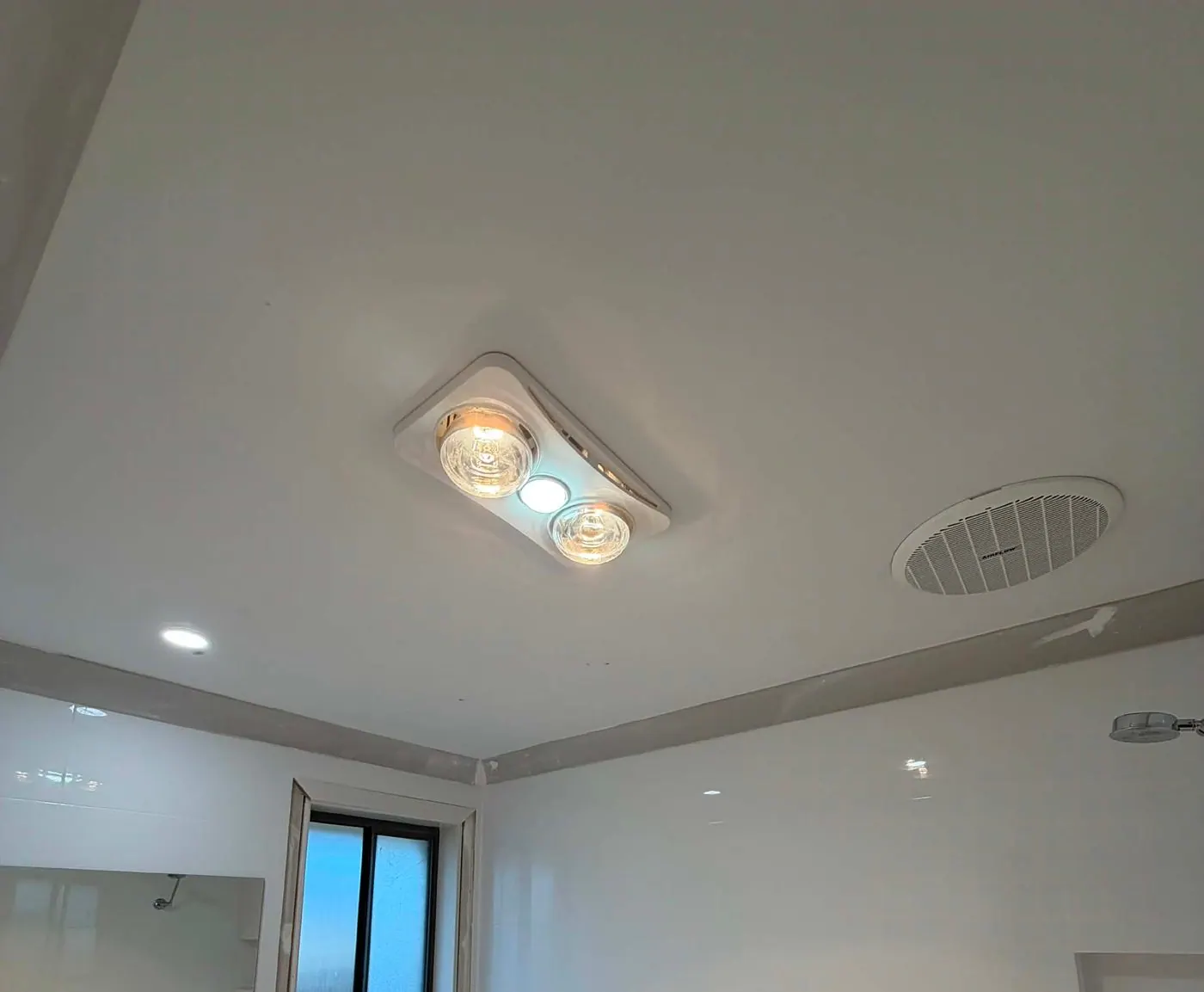
Bathroom Lighting in a Wynn Vale Renovation
A downlight over the vanity, centred on the mirror, plus a heat light unit and a separate shower exhaust.
Read the job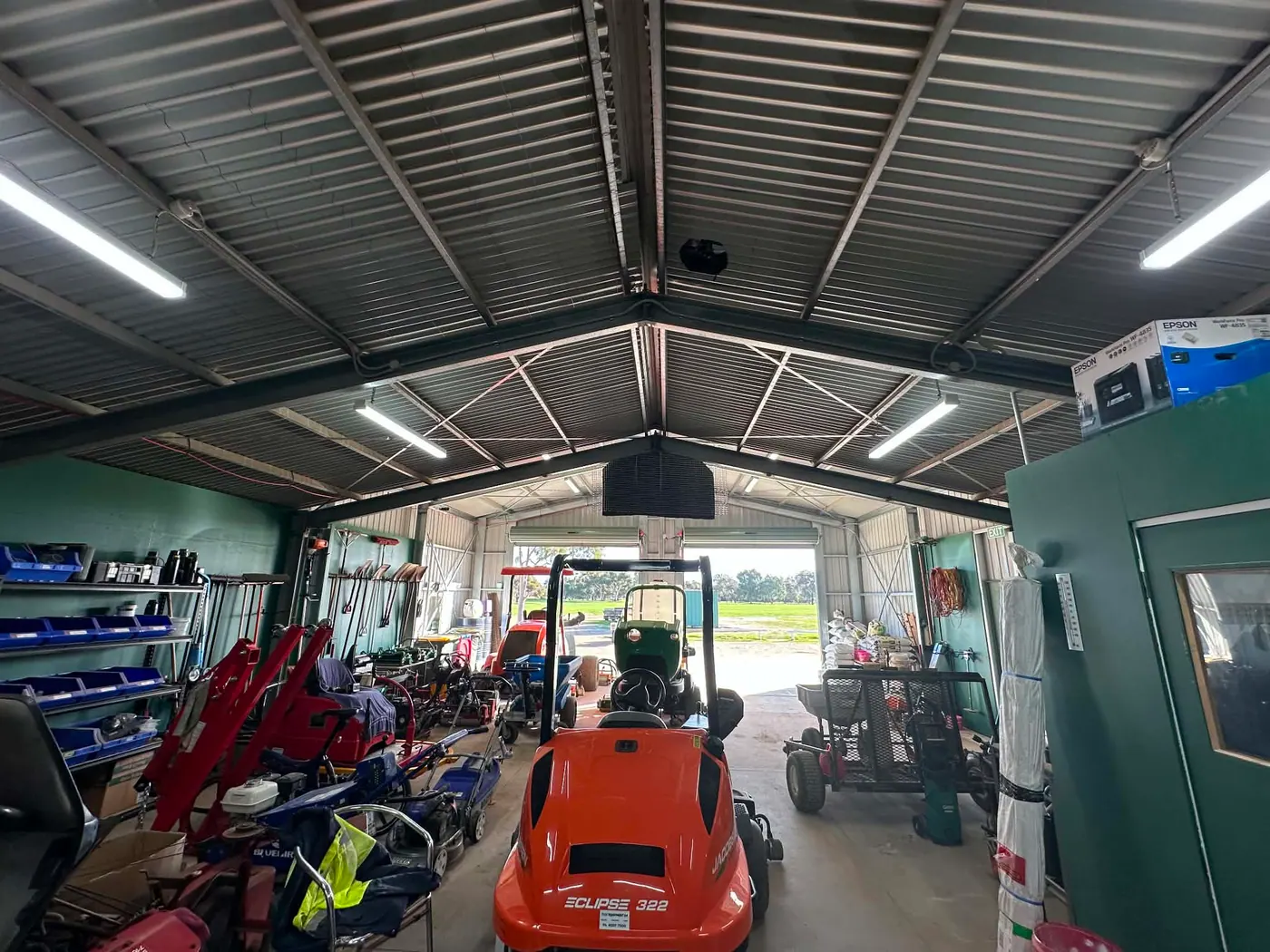
Shed Electrical Fitout at Mawson Lakes Golf Course
New board, LED lighting throughout, wall fans and a data connection trenched out to the shed. A working shed is a different job to a domestic one.
Read the job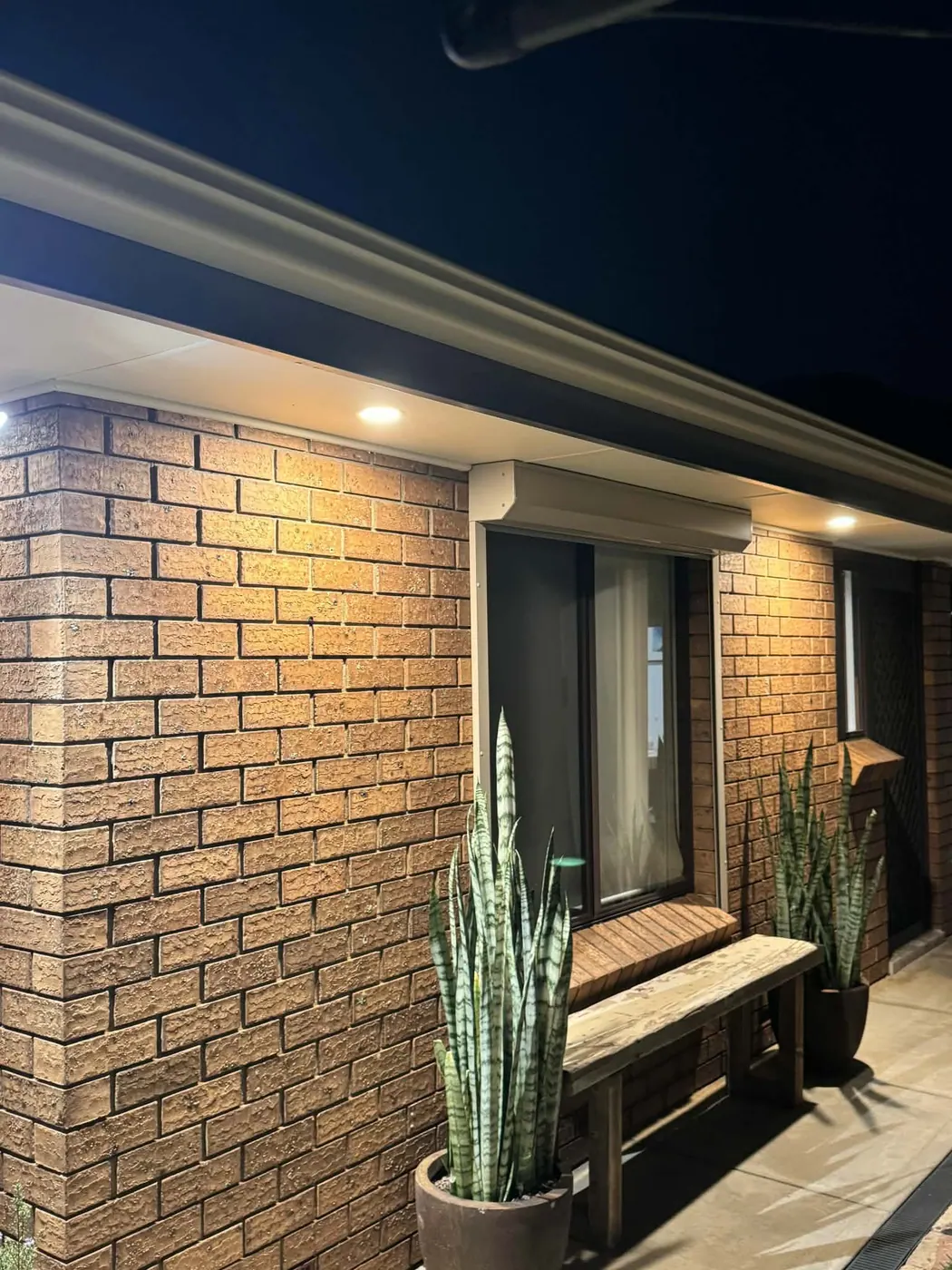
Eave Downlights and Outdoor Lighting in Redwood Park
Downlights in the eave wash light down the wall of the house, which is what makes a brick facade look intentional at night.
Read the jobGet a Free Quote
Owner-operated, licensed and insured. Justin quotes the job, does the job, and answers the phone afterwards.