Why This Matters to You
A domestic shed holds a mower and some paint tins. A working shed on a commercial site holds the equipment the whole operation depends on, gets used from first light, and has people servicing machinery in it. The electrical requirements aren't comparable.
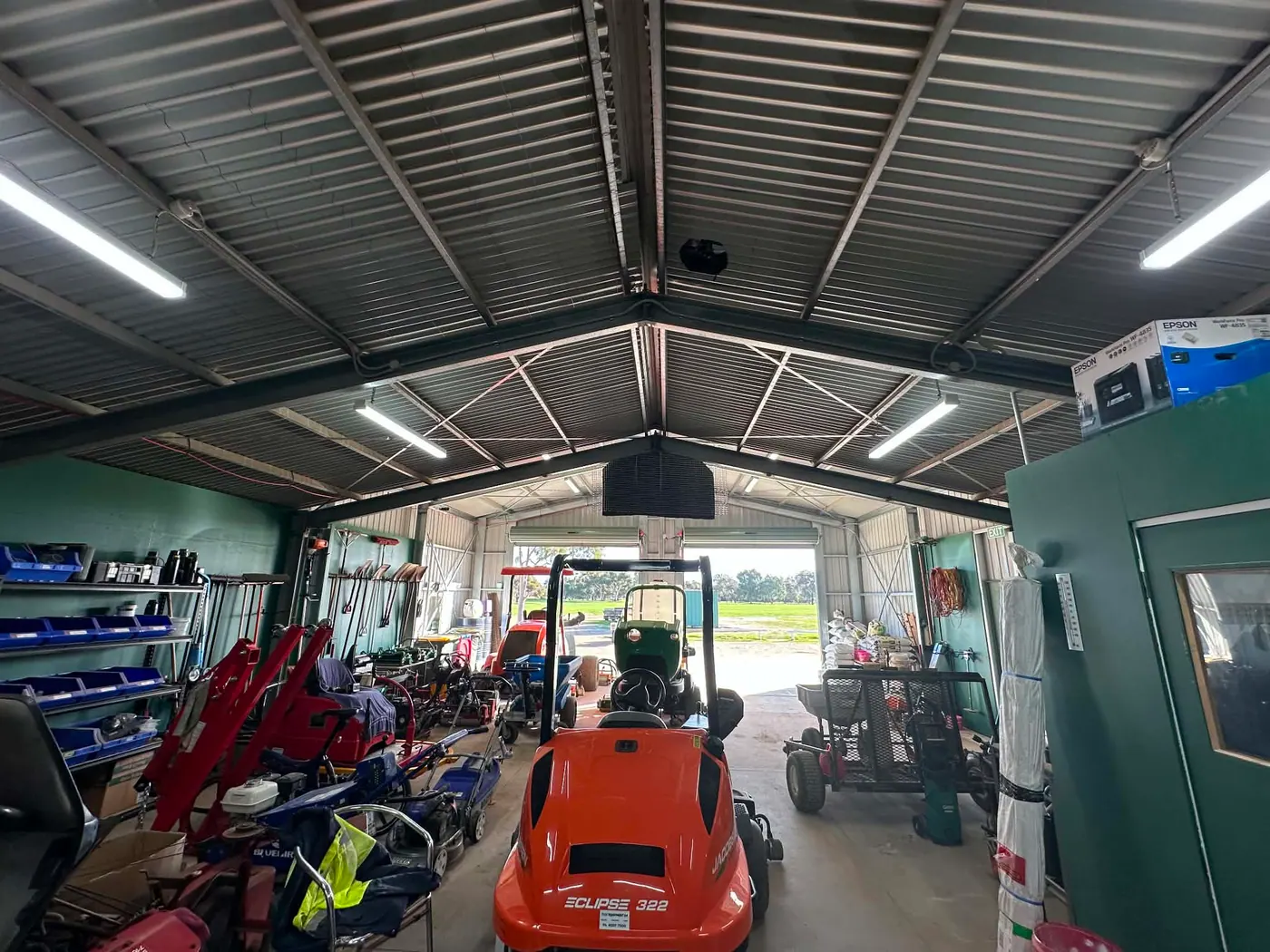
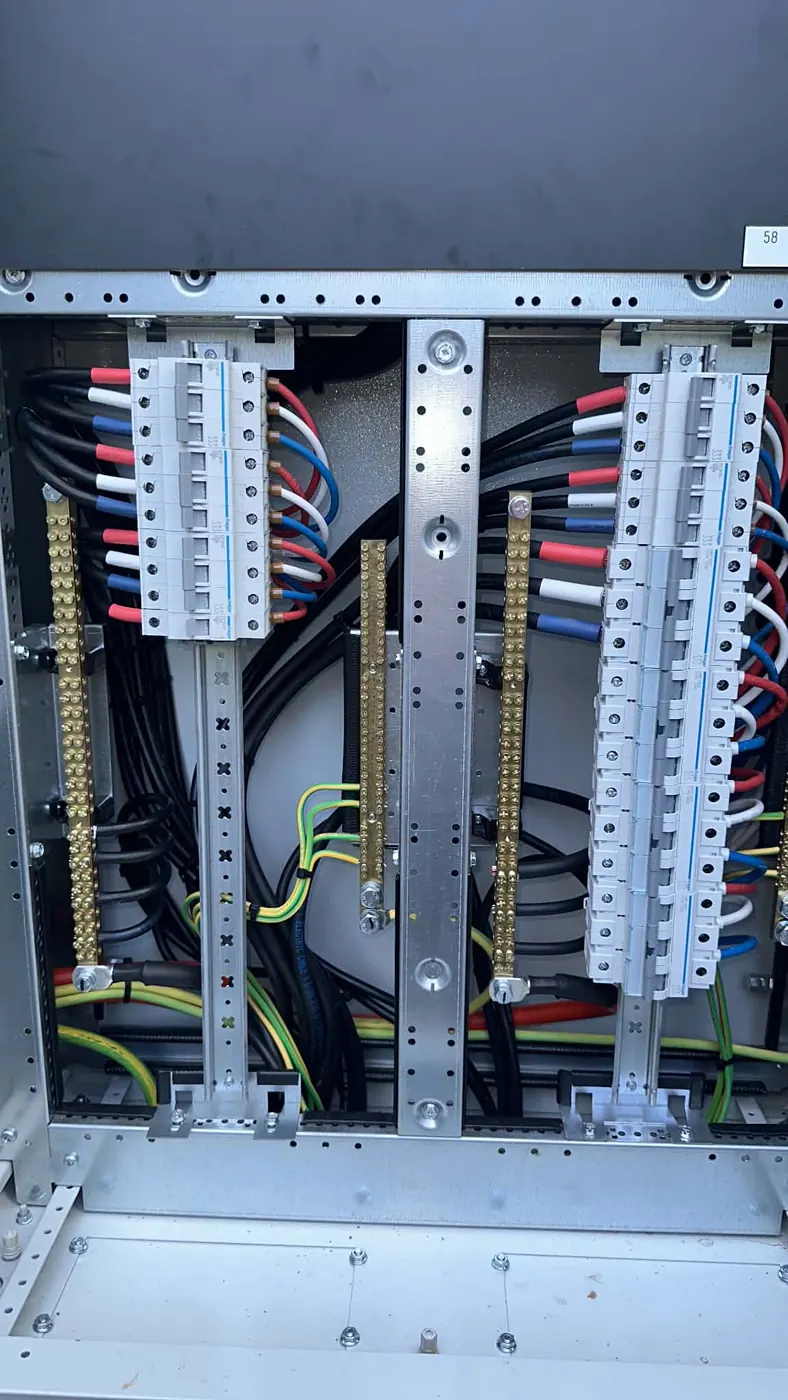
This was a full fitout of a machinery shed at Mawson Lakes Golf Course. New board, LED lighting throughout, two wall-mounted fans for ventilation, and a data connection run out to the shed underground.
Start With the Board
A shed like this isn't one circuit. It's lighting, general power around the walls, the bench, the fans, and whatever gets plugged in to charge overnight. Putting all of that behind one protective device means the first fault stops everything, and on a site where the day starts at sunrise that isn't an inconvenience, it's the morning gone.
So it gets a properly built board with individually protected circuits, dressed and labelled, with room left in it. The labelling matters more on a commercial site than a domestic one, because the person who needs to isolate something at six in the morning isn't the person who installed it. If a circuit can't be identified from the board, it will be found by trial and error, which means turning off things that should have stayed on.
Leaving spare capacity matters too. Sheds accumulate. A battery charger, then a compressor, then a second fridge. A board with nothing left in it turns each of those into a bigger job than it should be.
Lighting a Shed Is Two Different Jobs
General light and task light aren't the same thing, and a shed usually gets sold only the first one.
General light means you can see across the space, move machinery safely and find what you need. That runs along the length of the building rather than sitting in the middle, because a single central fitting in a shed with a high roof leaves the ends dim and casts long shadows off everything stored along the walls.
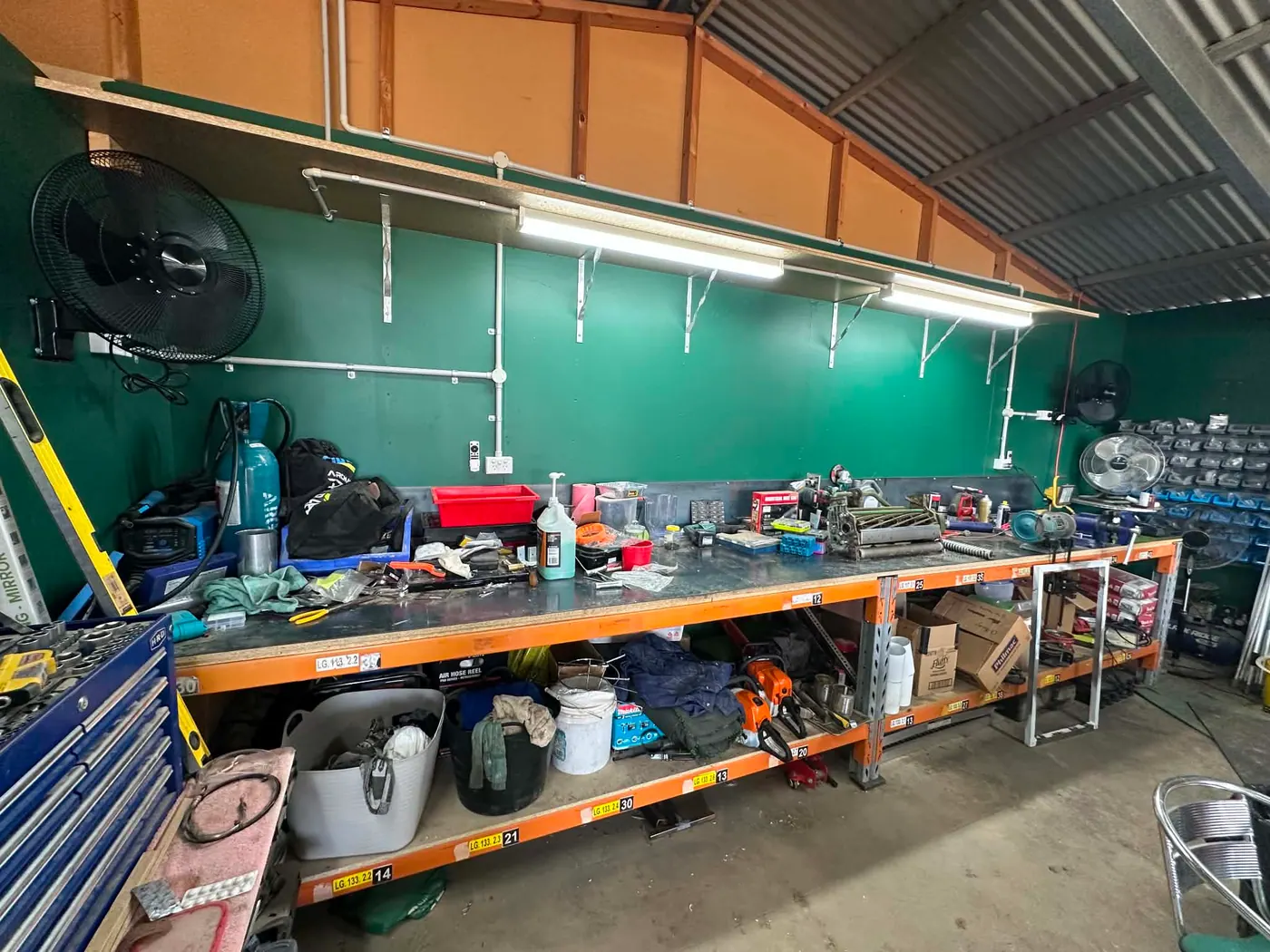
Task light is different. Somebody working at a bench needs light on the work, not on the room, and coming from in front of them rather than over their shoulder. That's why there's a separate LED fitting directly above the bench. Same principle as a kitchen: if you're standing between the light and what you're doing, the room is lit and your hands aren't.
Height and environment drive the fitting choice. A shed is dusty, gets damp, and things get thrown around in it, so the fittings need to suit that rather than being what would go in a garage at home.
Running Data Underground
The interesting part of this job was getting an internet connection out to the shed, which meant trenching.
Data underground has its own considerations, separate from power. Ethernet has a practical distance limit of around 100 metres for the whole run, which on a site the size of a golf course is a real constraint rather than a theoretical one, and it needs working out before the trench goes in rather than after. It also needs separation from power cable, and it needs to be in conduit, because direct-buried data cable in wet ground has a short life.
The other thing worth doing while a trench is open is putting a draw wire in the conduit and leaving space. The trench is the expensive part. Adding a second cable later through an existing conduit is straightforward. Digging the same trench twice isn't.
Fans, and Why Ventilation isn't Cooling
Two wall-mounted fans went in for ventilation and comfort on warmer days. Worth being clear about what they do: they move air, which makes people in the shed more comfortable and helps clear fumes and heat. They don't cool the building.
In a steel shed in an Adelaide summer that distinction matters, because air movement across a person is genuinely effective while trying to cool the volume of a shed isn't. Wall mounting rather than ceiling mounting also keeps the air moving through the working area rather than across the roof space.
If You Run a Site With a Shed on It
Two things are worth doing before you need them. First, find out whether your board has spare capacity, because that determines whether the next addition is a small job or a large one. Second, if you're ever opening a trench, put in more conduit than you need and leave a draw wire.
On a commercial site there are also obligations a home doesn't have around testing and maintaining the installation, which is worth being on top of rather than discovering during an insurance claim. We do this work for clubs, small commercial sites and homes across the northern and north-eastern suburbs. There's more on power and extra circuits and on test and tag if that's relevant to your site.