Why This Matters to You
Two things go wrong with pool electrical, and you have probably seen both. The first is an extension lead running across the lawn to the pump, which is a trip hazard, a shock risk and not a legal way to supply fixed equipment. The second is a pool that trips its safety switch every time it rains, so the pump stops, nobody notices for three days, and the water goes green.
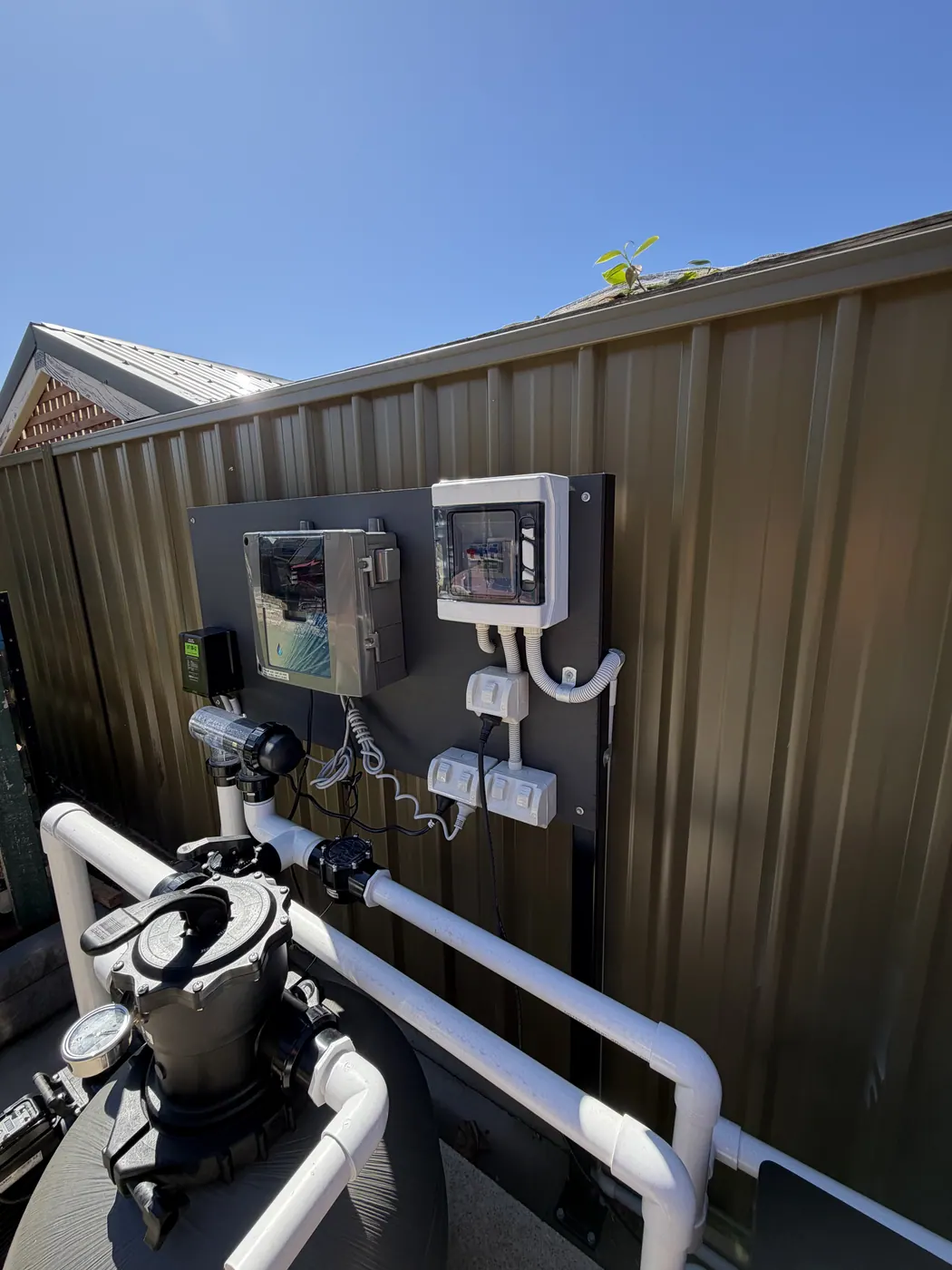
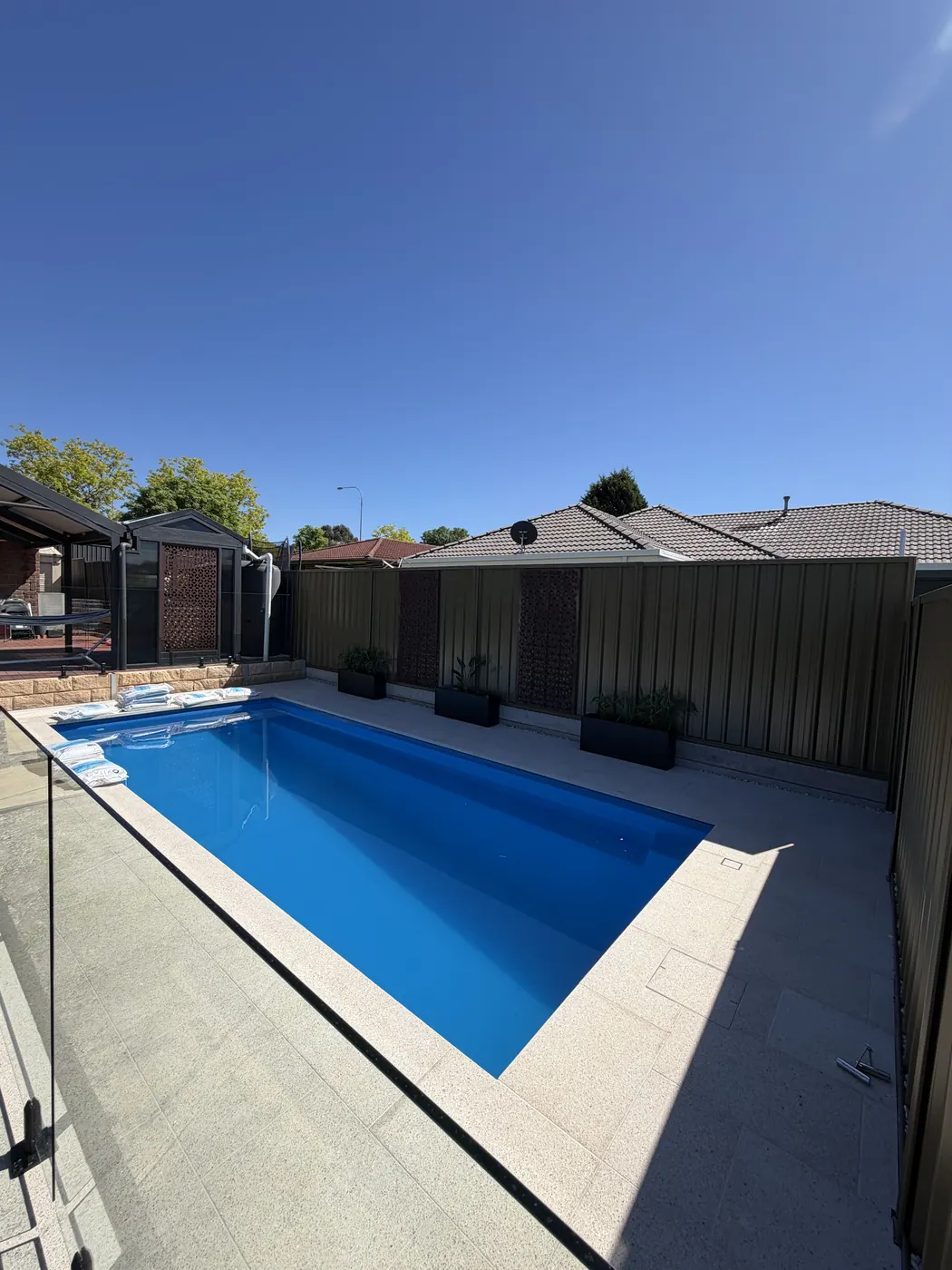
This job in Golden Grove, in the streets off Golden Way, was a new pool with the electrical done properly from the start. Underground supply from the house, a weatherproof subboard at the pool end, and a separate circuit for each piece of equipment. Here's why each of those decisions was made.
Getting Power Out to the Pool
Pool equipment is almost never near the switchboard. It sits at the back of the block, behind a fence, which means the power has to get there underground.
That's a trenching job before it's an electrical one. The cable goes in at the required depth, inside orange conduit so that anyone digging later can see immediately what they have found, and it needs to be sized for the distance rather than just for the load. Voltage drop is the part people forget. A cable that would be fine for a pump ten metres away can leave that same pump running low across a long run to the back of a block, and a motor fed on low voltage runs hot and dies early.
A Subboard at the Pool End
The alternative to a subboard is running four separate circuits all the way from the house, which means four times the trenching, four times the cable, and a switchboard at the house filling up with pool circuits.
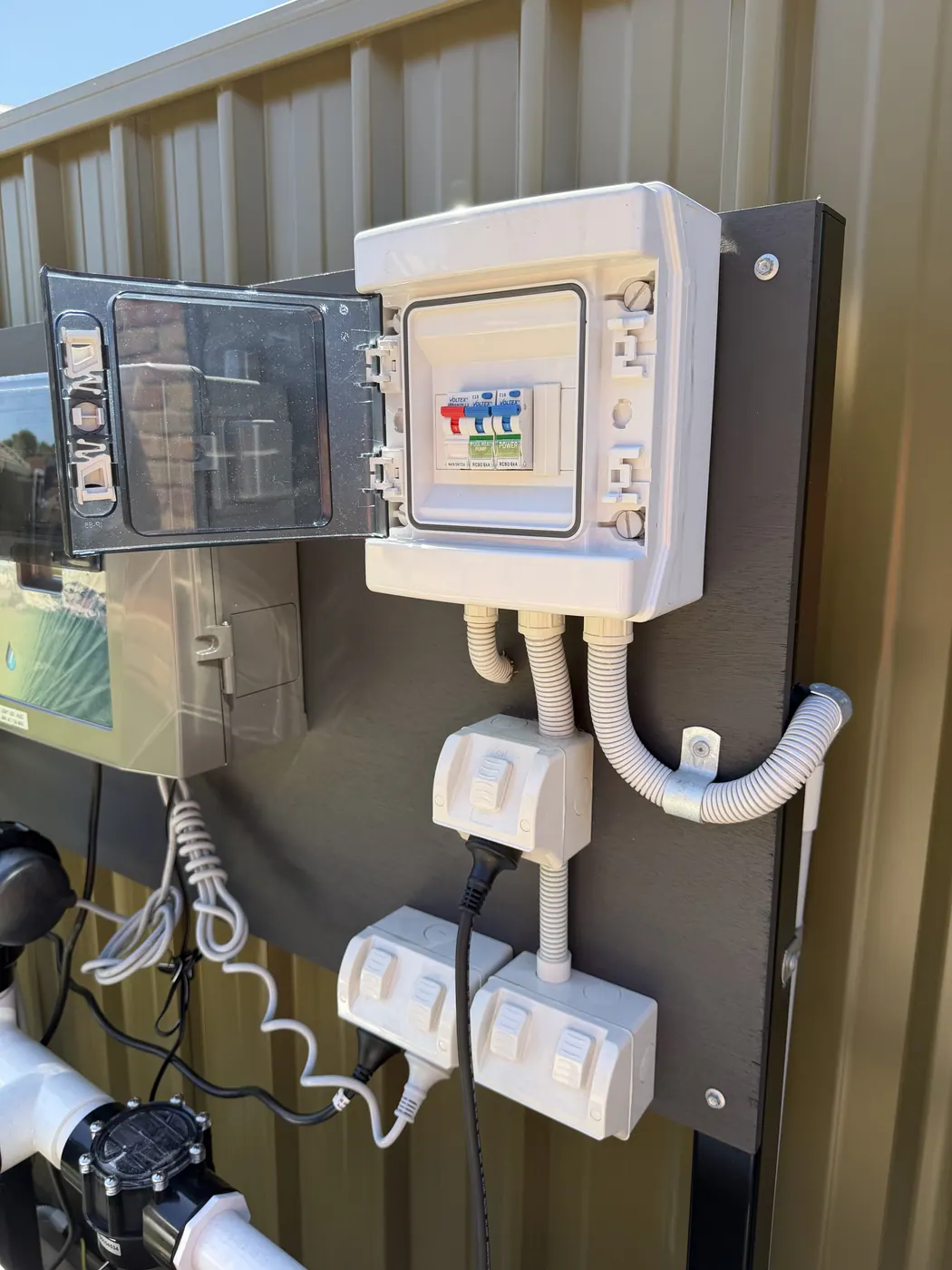
Instead this job runs one correctly sized supply out to the pool and puts a small board there. Everything the pool needs is protected and switched at the pool, so if the pump needs isolating for service it happens right there rather than someone walking back inside to guess at a label. It also leaves room to add to it later, which matters because pools accumulate equipment. Today it's a pump, a chlorinator and lights. In two years it's a heater and a robot cleaner as well. For the same reasoning applied to a main board, see switchboard upgrades.
Why Everything Got Its Own Circuit
This is the part that matters most, and it's the difference between a pool that works and a pool that annoys you.
Pool lights, outdoor outlets and pump motors are the equipment most likely to develop a small amount of earth leakage over time. They live in water, weather and UV. If all of that shares one safety switch, then the first fitting to let a bit of moisture in trips everything, including the pump. That's what nuisance tripping actually is: not a faulty safety switch, but one safety switch being asked to cover too much.
So the pool pump, the pool lights and the heater each got their own circuit and their own protection. A fault in a pool light now trips the pool light. The pump keeps running, the water keeps moving, and you have a fault narrowed to one circuit before anyone even looks at it. If your existing pool trips regularly, that's worth reading alongside our page on safety switches and RCD testing, because the safety switch is usually doing its job correctly and telling you something real.
A 15A Outlet for the Heater
Pool heaters, particularly heat pumps, commonly draw more than a standard outlet is rated for. A 15A plug has a wider earth pin than a 10A plug specifically so it physically can't be pushed into a 10A socket, because the circuit behind that socket was never built to carry it.
So the heater got a dedicated 15A outlet on its own circuit. If you're buying a heater, check what it needs before it arrives rather than after, because a 15A appliance and a 10A outlet is a problem that gets discovered on delivery day.
Built to Live Outside
Everything at the pool end is in weatherproof enclosures and weatherproof outlets, mounted on a backing board rather than screwed straight to the fence. It sits in full Adelaide sun and gets rained on for the next twenty years, and the difference between gear rated for that and gear that isn't shows up in about three summers.
There are also rules about how close electrical equipment can be to the water. AS/NZS 3000 defines zones around a pool, and what you're allowed to install and how well sealed it has to be depends on which zone it lands in. That's worked out before anything is mounted, not after.
If You're Putting In a Pool
Talk to your electrician while the yard is still open. Once the paving is down and the fence is up, trenching a supply out to the equipment becomes a much bigger and more expensive job than it needed to be. The cheapest time to run underground cable is when there's already a hole in the ground.
Get the equipment list from your pool builder first, including whether a heater is coming later. It's far easier to install a board with room in it than to go back and add capacity to a full one. We do this work across Golden Grove and the surrounding suburbs, and you can see the rest of what we cover locally on our Golden Grove electrician page.