Why This Matters to You
Most electrical incidents in homes aren't dramatic. They're a cord that has been quietly overheating under a rug, a safety switch that stopped working three years ago and nobody noticed, or a power board carrying twice what it was designed for. None of these announce themselves. They sit there until something gives.
The good news is that a decent share of it's checkable in about twenty minutes, without tools, by anyone living in the house. What follows is what actually matters, split into what you can do yourself and what needs a licensed electrician. Adelaide summers put real load on a house, so if you're going to run through this, the start of the warmer months is a sensible time.
1. Test Your Safety Switches, and Understand What the Test Proves
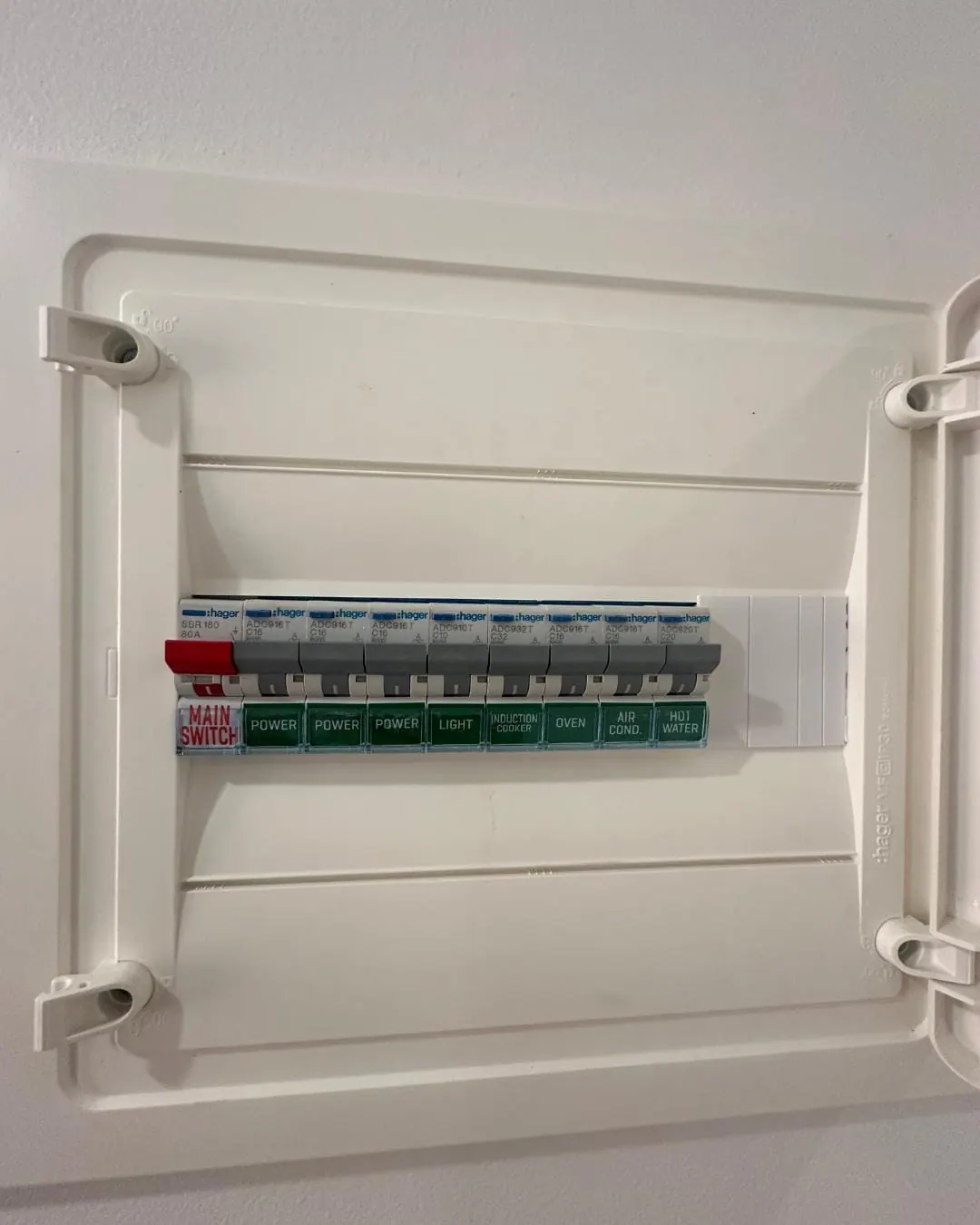
A safety switch (RCD) is designed to cut power within about 30 milliseconds if current starts leaking somewhere it shouldn't, through a damaged appliance, a nicked cable, or a person. It's the single biggest defence against electric shock in a modern home.
Press the "Test" button on each one every three months. It should trip instantly. If it doesn't, stop using that circuit and call an electrician.
Here's the part most people miss: the test button only confirms the mechanism moves. It doesn't confirm the device trips fast enough, or at the right leakage current, to actually protect someone. That needs a calibrated tester, and it's the difference between "the button works" and "this will save someone". If your RCDs have never had a proper instrument test, that's worth booking. Our guide to RCD testing and thermal imaging covers what a real test involves, and RCD testing and safety switches explains the service itself.
One more thing worth checking: a lot of older Adelaide homes have RCD protection on the power circuits but not the lighting circuits. If yours is like that, you're only half covered.
2. Power Boards, Double Adaptors and the Daisy Chain Problem
Plugging a power board into another power board is a genuine fire risk, not a technicality. Each board is rated for a total load, and chaining them lets you draw far more through one wall outlet than it was ever designed to carry. The outlet and the cable behind it heat up, and nothing trips, because the breaker is protecting the circuit rather than the overloaded accessory.
Watch the high draw items in particular: heaters, kettles, toasters, air fryers, and anything with a heating element. These are the ones that turn a marginal setup into a hot one. A fan heater on an extension lead run under a door is a classic.
If you're permanently short of outlets in a room, that's the actual problem, and the fix is additional powerpoints rather than more boards. It's safer, it's tidier, and in most rooms it's a straightforward job.
3. Check Cords, Plugs and Where They Run
Look along appliance cords for fraying, nicks, stiffness, or any section that has gone discoloured. Check the plug itself for scorching or a loose pin. If a plug feels warm after normal use, something is wrong with it.
Just as important is where cords run. Never under a rug or carpet, where heat can't escape and foot traffic works the insulation loose. Never pinched behind furniture pushed hard against a wall. Never through a doorway that closes on them.
Extension leads are for temporary use. If a lead has been in the same spot for a year, it has stopped being an extension lead and started being unapproved fixed wiring.
4. Wet Areas Deserve More Care Than They Get
Bathrooms, kitchens, laundries and anywhere outdoors carry more risk because water lowers the resistance between you and earth. Dry your hands before touching switches. Keep appliances well clear of sinks and baths. Don't use a portable heater in a bathroom.
Outside, check that outdoor outlets have intact weatherproof covers that actually close, and that any lead running to a shed or pergola is rated for outdoor use rather than draped across the lawn. Garden power in older Adelaide homes is frequently an afterthought that has been extended over the years, and it's a common place to find work that was never done by a licensed electrician.
5. Know the Age of Your Switchboard
If your board still has ceramic fuses, the ones with the removable carriers and fuse wire, it belongs to an era before safety switches existed. It offers no shock protection at all, only rudimentary overload protection, and it can't be extended to run modern loads.
A lot of the housing stock through the north-eastern suburbs sits in exactly this bracket. If your board looks like it came with the house and the house is from the sixties or seventies, it's worth having assessed. The warning signs that a switchboard needs upgrading covers this in more detail, and switchboard upgrades explains what the work involves.
6. Pay Attention to Things That Have Changed
Most of the calls we get that turn out to be serious started with someone noticing something different. A light that flickers when the air conditioner starts. A switch that has begun to feel warm. A faint smell of hot plastic near the board that comes and goes. A breaker that trips once a month rather than never.
None of those are emergencies on their own, and all of them are worth acting on, because they're the early version of a problem that gets more expensive and more dangerous the longer it runs.
When to Stop and Call Someone
Turn off the main switch and call an electrician straight away if you smell burning plastic, see scorch or brown marks around an outlet or the switchboard, get any kind of tingle from an appliance or a tap, or have a breaker that trips immediately every time you reset it. That last one means there's a fault on the circuit right now, and resetting it repeatedly isn't a fix.
If it's after hours and it won't wait, that's what an emergency electrician is for.
The Honest Summary
Testing your RCDs quarterly, keeping cords sensible, and not chaining power boards covers a lot of ground for no cost. Beyond that, the two things genuinely worth paying for are a proper instrument test of your safety switches and an assessment of an old switchboard. Both are quick, neither is expensive relative to what they protect against, and together they cover the failure modes that actually hurt people.