Why This Matters to You
Your switchboard is where every circuit in the house terminates and where all the protection lives. When it's old, the failure is rarely sudden. It's a slow drift where the board gets less able to handle what the house now asks of it, while the protection it offers falls further behind what's expected.
Modern houses draw far more than the ones these boards were designed for. Ducted air conditioning, induction cooktops, EV chargers, heat pump hot water, a home office running all day. A board specified in 1972 wasn't built with any of that in mind.
Here's what to look for, in rough order of how urgently it needs attention.
1. Burning Smell or Scorch Marks
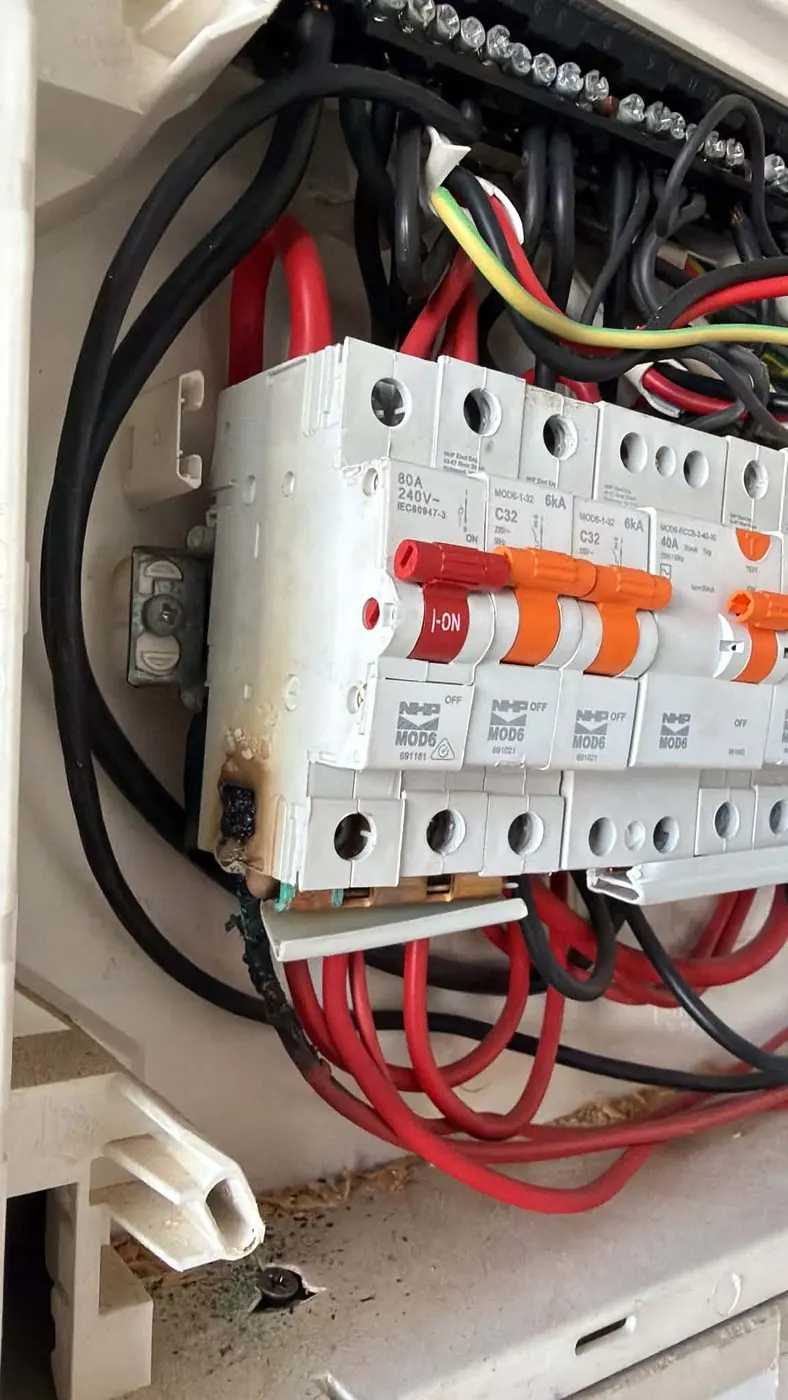
Taking this out of order because it's the one that can't wait. If you smell hot or burning plastic near the board, or see brown or black marks around the board or any outlet, turn off the main switch and call an electrician immediately.
That smell is insulation or plastic getting hot enough to break down, which means a connection is arcing or badly overloaded. It doesn't resolve itself. Left alone it progresses to a fire, and it can do so quickly.
Worth knowing: a connection can run hot for months before it ever produces a smell or a mark. That's precisely what thermal imaging is for, and it's covered in more detail in our guide to RCD testing and thermal imaging. It's the only practical way to catch this stage early.
2. No Safety Switches, or Only Partial Coverage
If your board has no RCDs at all, you have no shock protection, and that's the strongest single argument for upgrading.
More common, and easier to miss, is partial coverage. Plenty of Adelaide homes had RCDs added to the power circuits at some point and never to the lighting circuits. That leaves the lighting, and often anything hard wired like exhaust fans, with no shock protection at all. People in that situation generally believe they're covered, because there's an RCD on the board.
If you aren't sure which of your circuits are protected, that's worth establishing. It's a quick thing to check and the answer is frequently not what the owner expected.
3. Ceramic Fuses
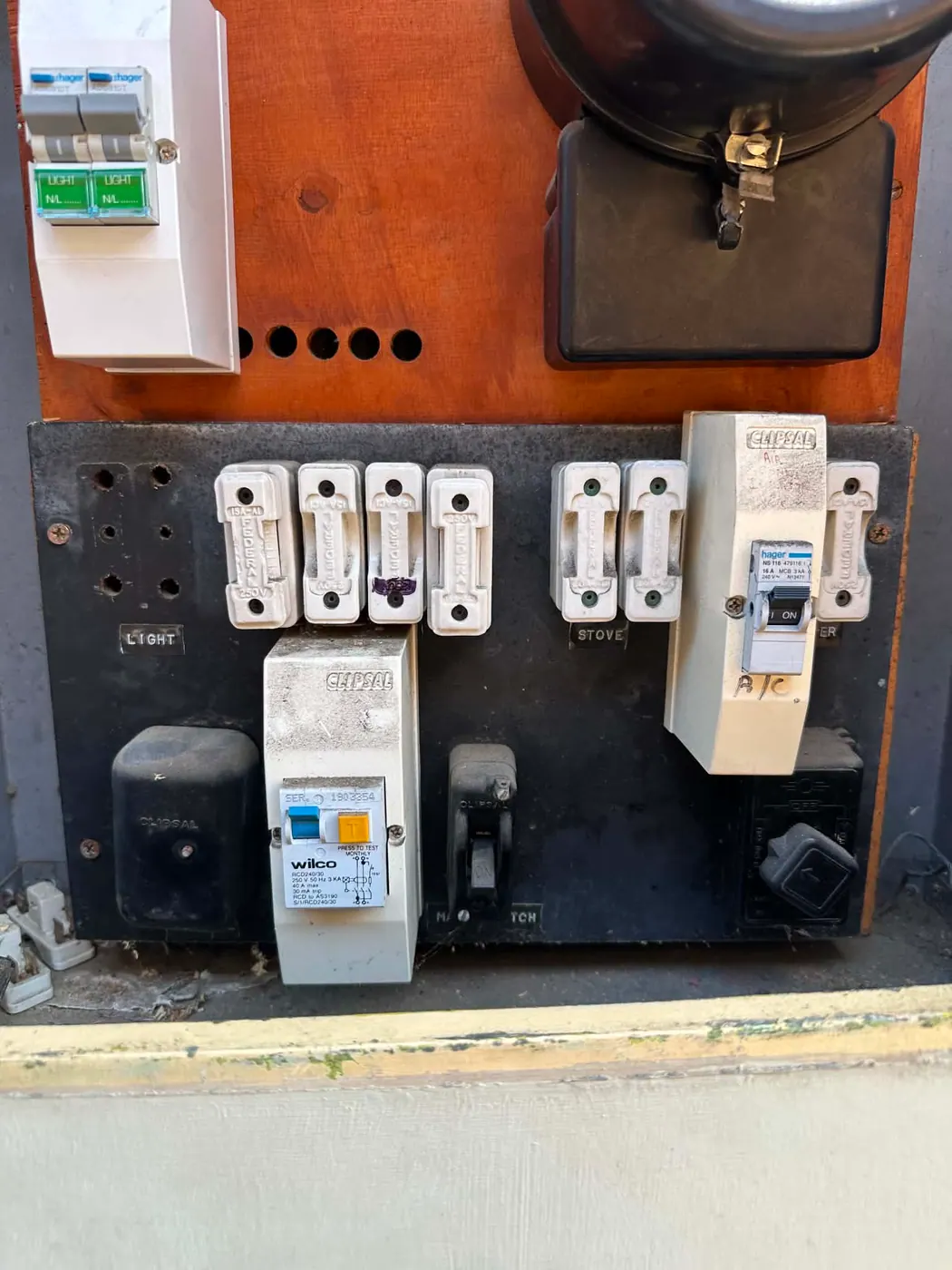
If your board still has ceramic fuse carriers, the porcelain holders you pull out with fuse wire inside, the board predates safety switches entirely.
Beyond the absent shock protection, rewireable fuses have a practical problem: they only protect correctly if the right gauge of wire was fitted. Over decades, boards get rewired by whoever was around at the time, and heavier wire gets fitted to stop a fuse that "keeps blowing". At that point the fuse is no longer protecting the circuit, and the thing it was protecting against is now free to happen inside the wall.
A lot of the original housing stock through Tea Tree Gully and the surrounding suburbs is in this category. If the board looks original and the house is from the sixties or seventies, assume it needs assessing.
4. Fuses Blowing or Breakers Tripping Repeatedly
An occasional trip is usually a faulty appliance and not a concern. A pattern is different.
If the same breaker goes every time the kettle and the toaster run together, that circuit is at capacity, which normally means too much has been added to it over the years. If a breaker trips immediately every time you reset it, there's a live fault on that circuit right now, and it needs looking at rather than resetting.
What matters is whether it's getting more frequent. A circuit that tripped twice last year and twice last month is telling you something is deteriorating.
5. Lights That Flicker or Dim Under Load
Lights dipping when the air conditioner or the oven kicks in points to a loose connection or a circuit working harder than it should. Loose connections are the ones to take seriously, because a loose connection is a hot connection, and that's the same path that ends in the scorch marks above.
If the flickering is house wide rather than one room, it's more likely to be at the board or the incoming supply, and that's worth investigating properly.
6. No Room Left on the Board
This one isn't a safety issue on its own, it's a planning one. If the board is physically full, every future addition becomes awkward and expensive. Adding an EV charger, a new air conditioner, or a decent workshop circuit all need a spare way and adequate capacity.
If you're considering any of those in the next few years, doing the board first is usually cheaper than doing it twice.
There's more on this in what a full switchboard actually blocks, including how to check before you commit to the equipment.
7. Asbestos Backing Board
Switchboards from roughly the fifties through the seventies were often mounted on asbestos backing sheet. Undisturbed and in good condition it isn't an immediate hazard, but it does constrain what can be done to the board, and it needs handling correctly during any upgrade rather than being discovered halfway through.
If your board is that vintage, mention it when you get a quote so it's priced properly from the start rather than becoming a variation on the day.
What These Look Like in Real Boards
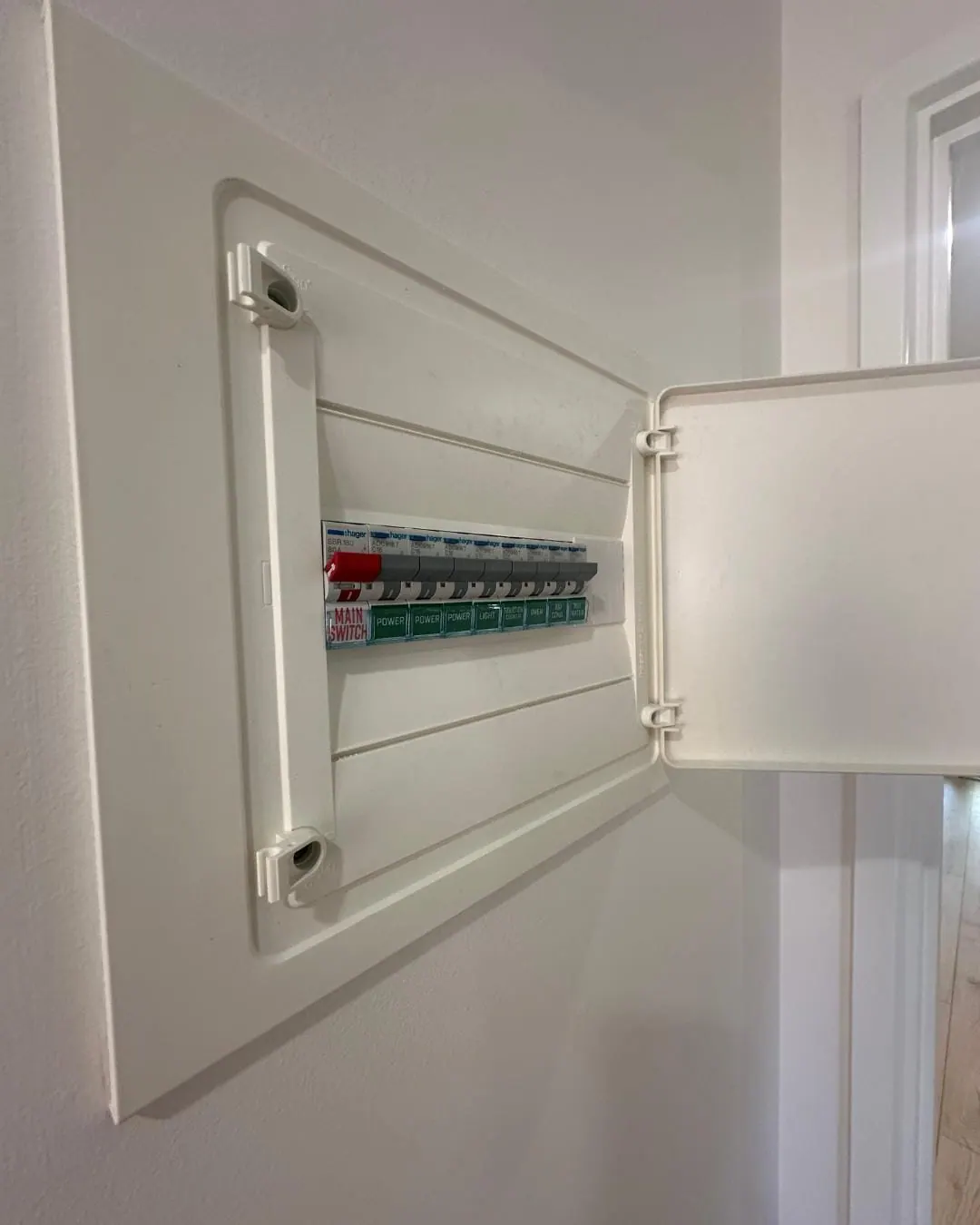
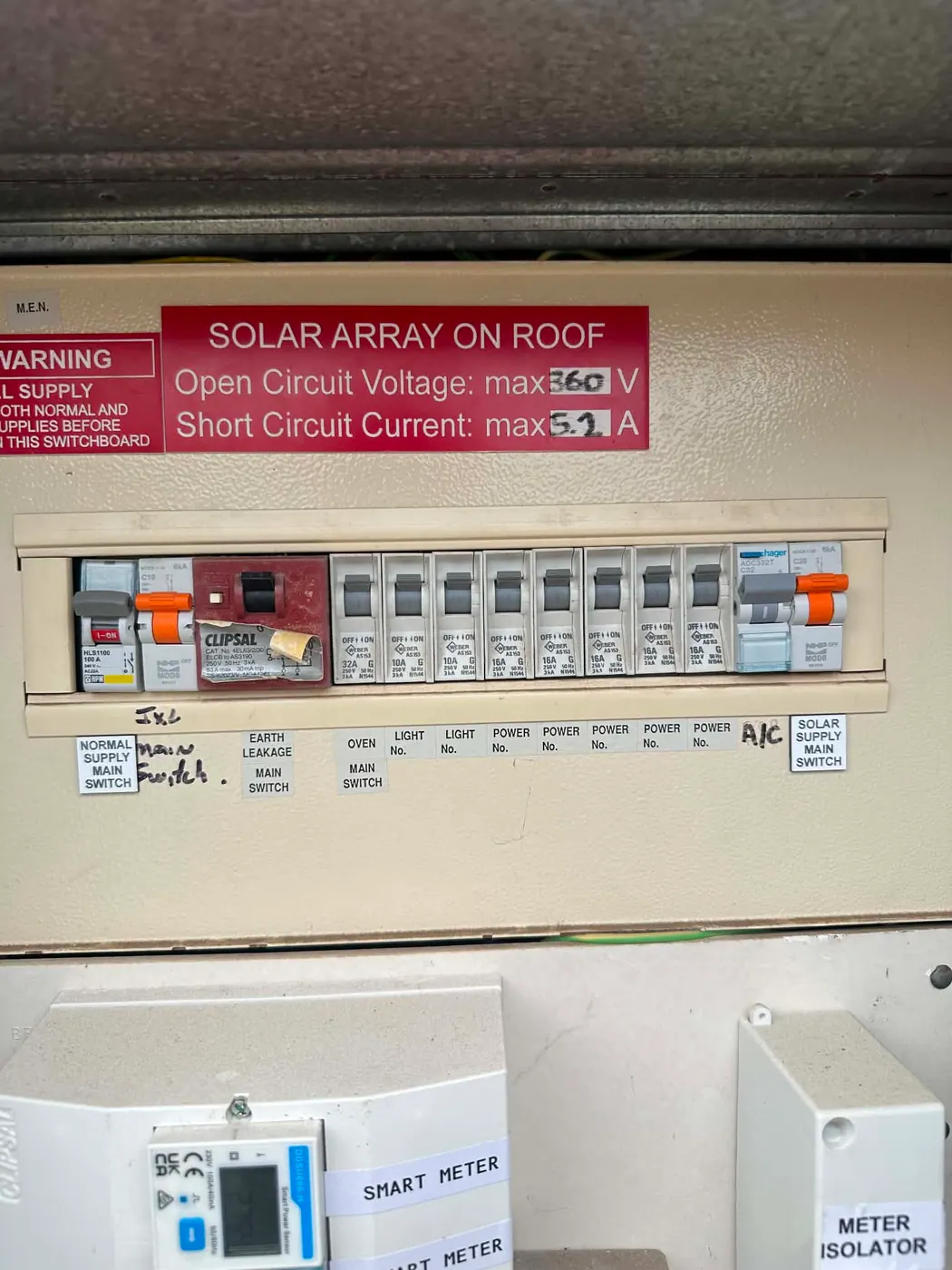
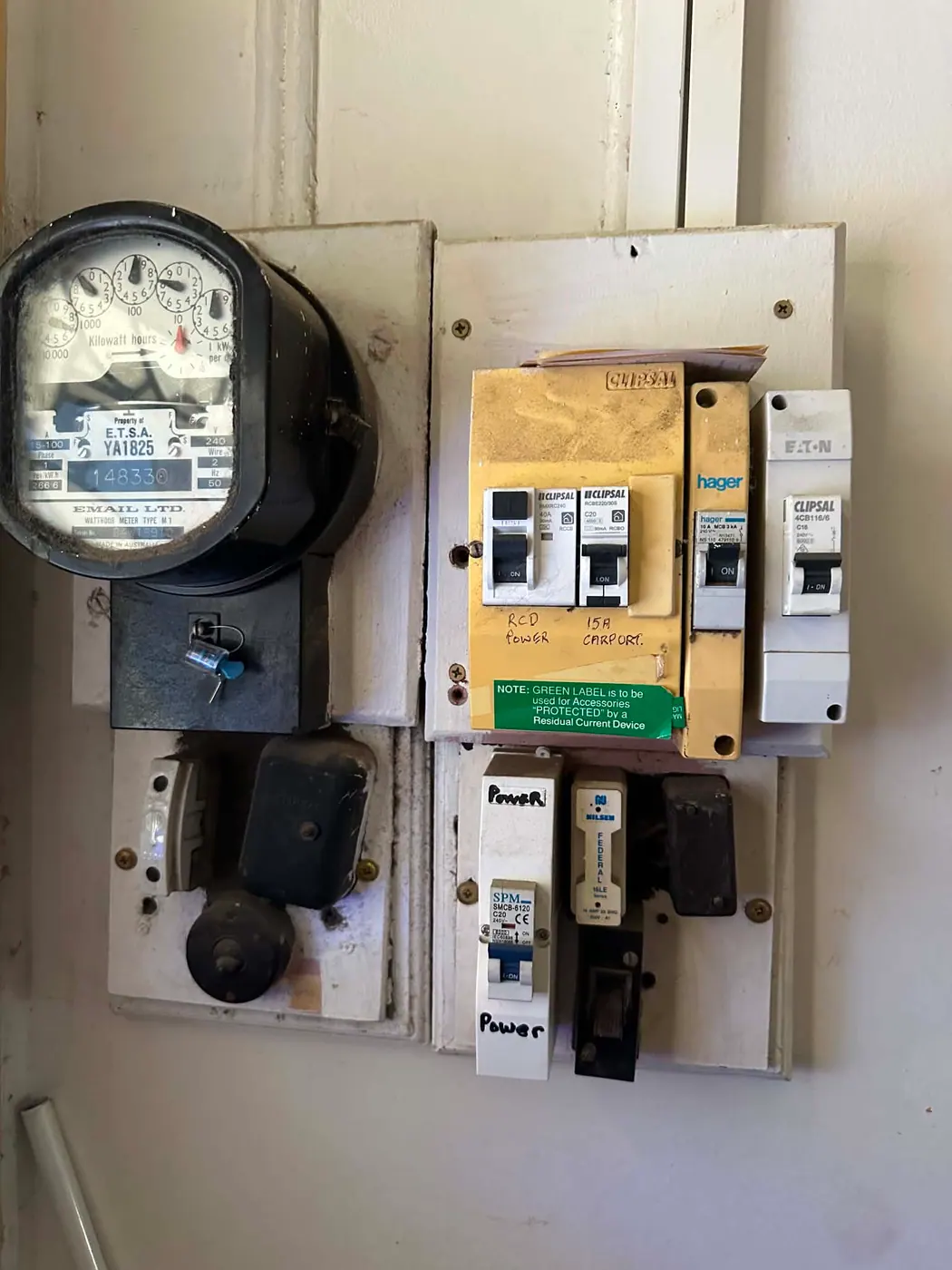
The photos below are boards from around the north-eastern suburbs, and each one shows a different version of the same question. None of them were emergencies on the day. All of them were worth doing something about.
Ceramic fuses. The first board is the straightforward case. Rewireable fuses, no safety switches, nothing that could be described as modern protection. There's no diagnosis needed here: a board like this is at the end of its life and the only question is timing.
One safety switch doing everything. The second is the one people get wrong, because there's an RCD on the board and the owner reasonably assumes they're covered. They are, in the narrow sense. But a single device protecting every circuit means one fault anywhere puts the whole house in the dark, and it's nothing like the per-circuit protection a board would be built with now.
Labels that are guesses. The third board is labelled by hand, and a couple of the labels have question marks. Somebody wasn't certain what those circuits fed and wrote down their best guess. That isn't a safety fault on its own. It does mean nobody can safely isolate part of the house without testing first, and it's a reliable sign the board has been added to over the years without anyone stepping back.
Heat damage. The fourth is the one worth dwelling on, because that board wasn't especially old. The main switch is discoloured and heat damaged from a loose connection left behind by an earlier solar install. Age had nothing to do with it. A poor termination on a newer board will cook itself just as happily as an old one, which is why "my board is only fifteen years old" Isn't the reassurance people take it for.
What an Upgrade Actually Involves
A switchboard upgrade replaces the enclosure and the protective devices: main switch, circuit breakers, and RCDs across the circuits. Existing circuits get transferred across, tested, and labelled properly, which by itself is worth something in a house where nobody has ever known which breaker does what.
Expect the power to be off for a chunk of the day. Expect the electrician to find at least one thing behind the old board that nobody knew about, because on boards of this age that's closer to the rule than the exception. A good quote states what's included, what's excluded, and what happens if something turns up once the old board is off the wall. Ours does, and you hear about anything unexpected before the work continues rather than on the invoice.
The switchboard upgrade page covers the process and what drives the price.
What It won't Fix
Being straight about this: a new board doesn't rewire the house. If the cabling in the walls is old rubber or fabric insulated, or previous work was done poorly, the new board will protect those circuits far better than the old one did, but the cabling itself is unchanged.
In practice a proper upgrade usually surfaces those issues, because the circuits get tested during the changeover. Better to know.
If Any of This Sounds Like Your Place
Scorch marks or a burning smell means turn off the main switch and call now. Everything else on this list is worth an assessment rather than an emergency, and the assessment is the cheap part. The expensive version is waiting until the board makes the decision for you.