Why This Matters to You
If you want a house to feel different, there are three things that do more than anything else for the money: paint, floors and lighting. We see it constantly. A house gets those three done and people walk in and assume it has been rebuilt, when the layout hasn't moved and the kitchen might not even have been touched.
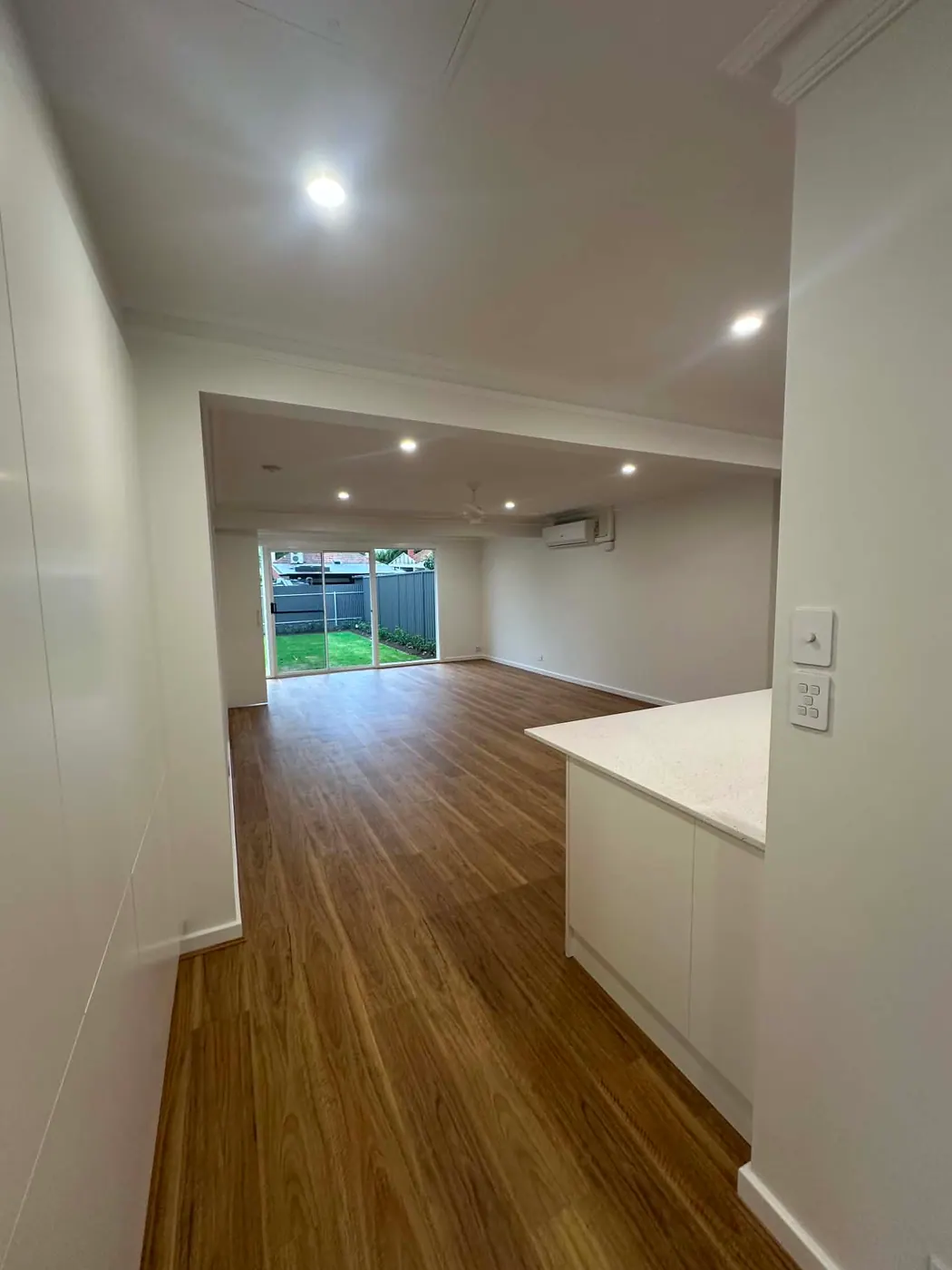
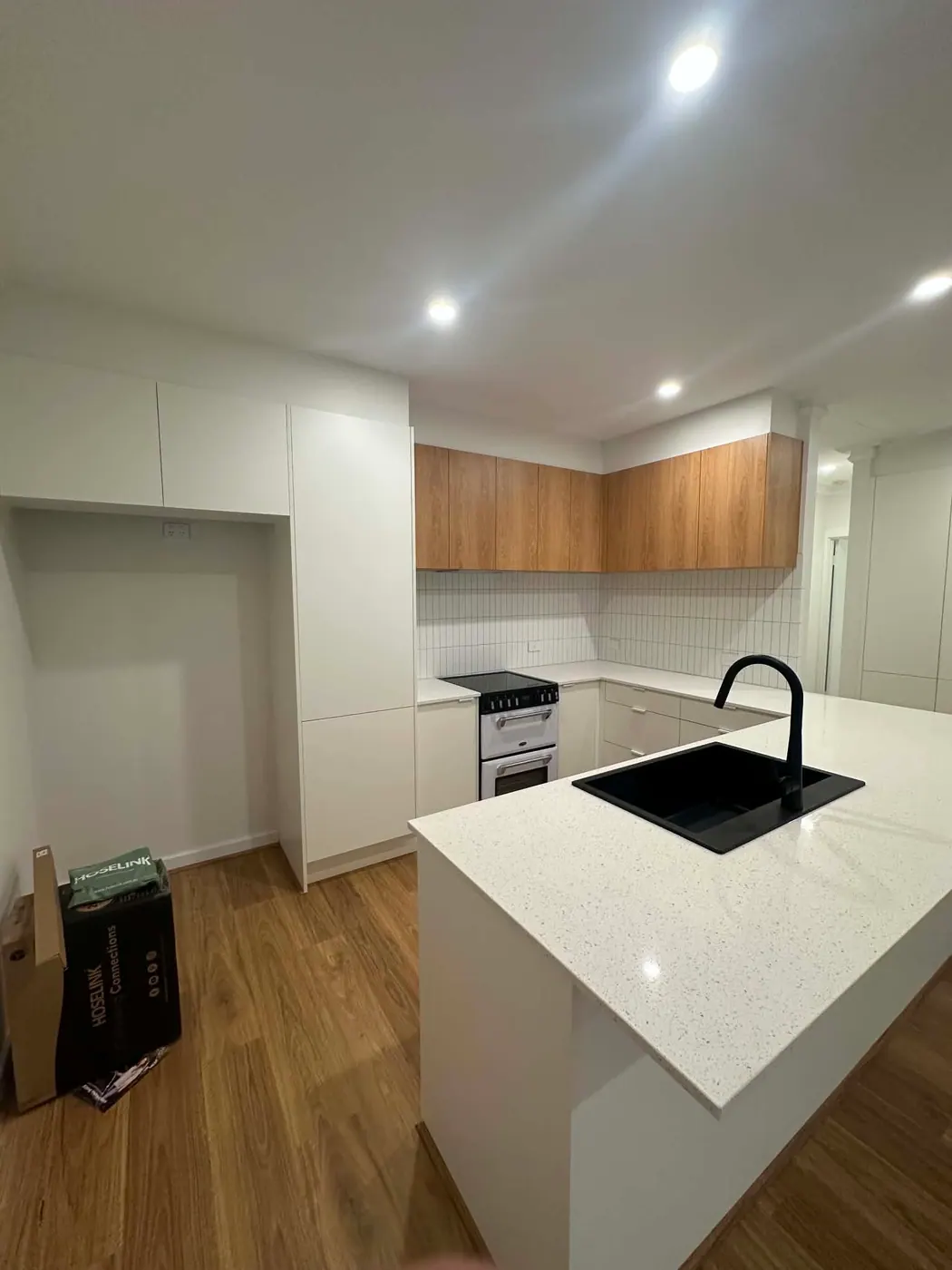
This job in Golden Grove was the full version. Over forty LED downlights through the whole house, new floors, every wall painted, the kitchen updated with new appliances, and every switch and powerpoint replaced. Our part was the lighting, the switches and outlets, and the kitchen.
Paint, Floors and Lighting
Each of the three does something the others can't.
Paint resets every surface and it's the cheapest of the three by a long way. Floors change what the whole house feels like underfoot and visually tie rooms together, particularly when you go from several different floor coverings to one. Lighting is the one people underestimate, because it changes not just how the house looks but how it reads. A room lit by a single centre fitting with a yellowing diffuser looks dated in a way that no amount of paint fixes, and it makes good paint and good floors look worse than they are.
The reason they belong together is practical rather than aesthetic. Installing downlights means cutting into ceilings. Replacing switches and outlets means marks on walls. Running anything new means access. If the painter is coming anyway and the floors are already up, all of that's absorbed into work that was happening regardless. Do the lighting two years after the painting and you're paying someone to patch and repaint.
In our experience this is where the money goes furthest, both for people renovating to sell and for people who intend to stay. We're electricians rather than valuers, so take the resale part as a trade observation rather than a valuation, but the pattern is consistent enough that it's worth saying.
The Part Everyone Forgets
Every switch and powerpoint in the house was replaced with a current style, and this is the detail most people leave out of the budget.
It matters visually because switch plates are at eye level and at hand height, on every wall, in every room. Twenty-year-old plates that have yellowed unevenly sitting against brand new paint are the single clearest giveaway that a house has been freshened up rather than renovated. They're also the cheapest thing on the list to fix.
There's a second reason that has nothing to do with looks. Replacing an outlet means the terminations behind it get seen. Connections work loose over decades, and a loose connection heats up, and heat is what eventually discolours and embrittles the insulation around it. Most of the time everything behind the plate is fine. Occasionally it isn't, and finding that during a planned renovation is a much better outcome than finding it later. It's also why this is electrical work rather than a job for whoever is already on site with a screwdriver.
On Forty-Plus Downlights
Forty sounds like a lot until you count the rooms. Spread across a whole house it's a normal number, and the count isn't really the decision anyway. The spacing is.
Downlights get spaced against ceiling height and beam angle so the light overlaps evenly rather than leaving scallops of bright and dim across a wall. Get that wrong in either direction and you notice: too few and the room has dark corners no lamp fixes, too many and it feels like a display home with nowhere comfortable to sit at night.
The way out of that tension is dimming rather than fewer lights. A well-lit room you can wind back to a quarter gives you both a working kitchen and a comfortable lounge from the same fittings, and it's far cheaper to allow for while the ceilings are open. More on the fittings themselves is on our downlights and LED lighting page.
Don't Stop at the Back Door
The one place a lighting upgrade usually stops short is outside, and it's the cheapest remaining win once someone is already on site.
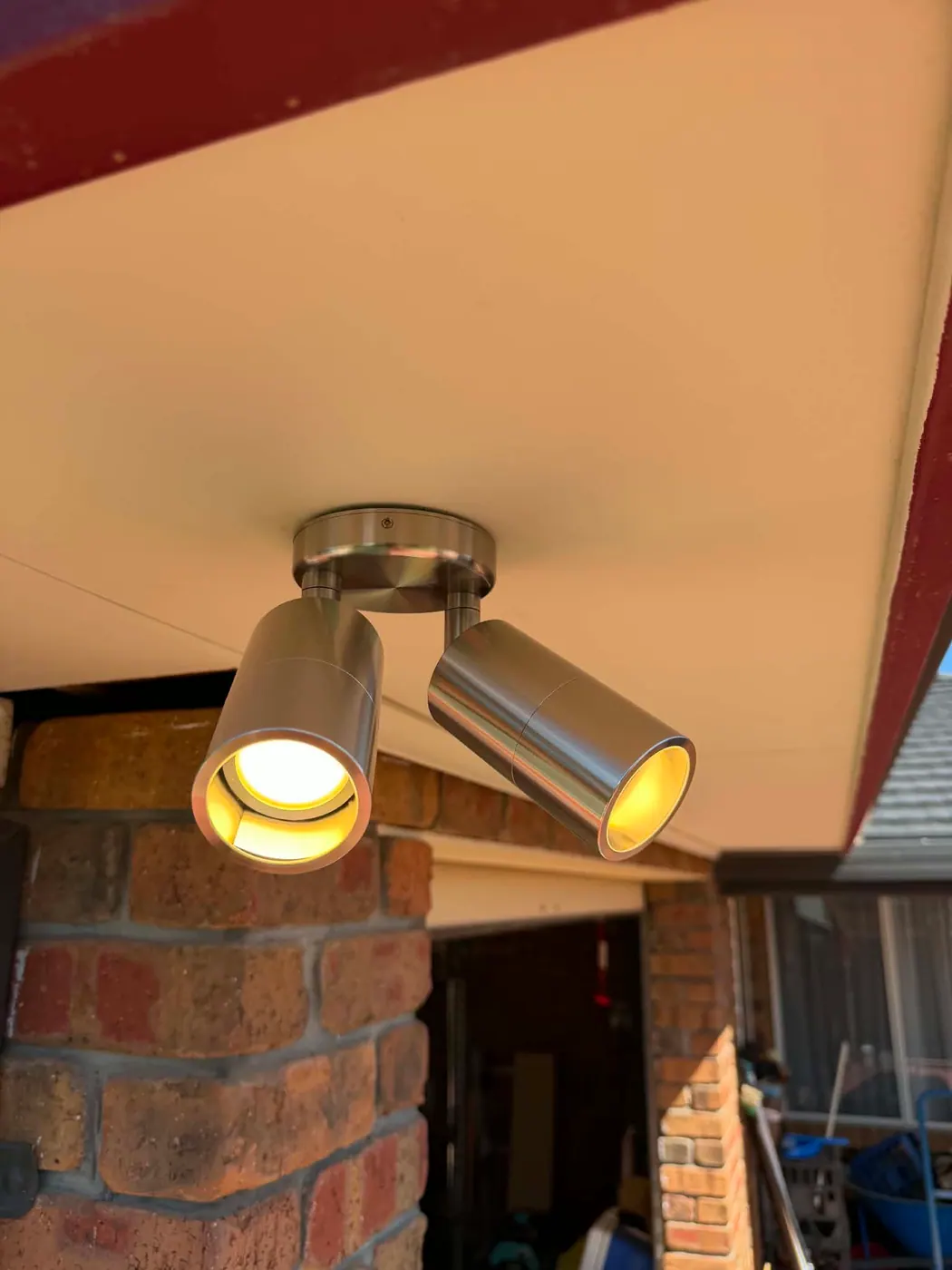
The third photo below is from a separate Golden Grove job rather than this one, but it makes the point. A twin-head spotlight aimed across a pool area turns a space that was unusable after dark into one you can actually see. Outdoor lighting does two jobs at once: it makes the area usable at night, and a house that's lit at the approaches is a less appealing target than one that isn't.
The things worth getting right are aim and glare. A floodlight pointed at where people walk rather than at their eyes is the difference between lighting an area and blinding everyone in it. Sensors are worth considering for anywhere you only pass through, and a switch for anywhere you sit. And it all needs to be weather-rated and on a circuit that can carry whatever else is out there.
The Kitchen and the New Appliances
The kitchen was updated in the same run of work, including new appliances throughout.
The thing to check there's that new appliances don't necessarily want the circuit the old ones had. Cooking appliances in particular have changed, and swapping what was in a kitchen twenty years ago for a current equivalent can mean a different circuit rating, a different connection type, or a dedicated circuit where the old appliance shared one. It's a five minute conversation before you order and a genuine problem on delivery day if nobody has had it.
Our oven and cooktop installation page covers the connection side of that in more detail.
If You're Planning This
Do the three together, and get the electrical decided before the painter books in. The order that saves money is: agree the lighting layout and the switch and outlet positions, do the electrical, then plaster patching, then paint, then floors last so they don't get worked over.
If you're only doing one of the three, lighting is the one that changes the feel of a house most for the least disruption, because it doesn't require you to move out or empty rooms. If you're doing all three, say so at the quoting stage, because it changes how the job is sequenced and usually reduces what it costs. There's more on renovation sequencing on our renovation electrician page, and on what we do locally on our Golden Grove electrician page.