Why This Matters to You
Two fittings on the same job in Redwood Park, and two completely unrelated problems. The sconces in the master suite are a dimming problem. The chandelier in the stairwell is an access problem. Neither is about the fitting itself, which is why both are worth understanding before you buy anything.
Dimming LED isn't Automatic
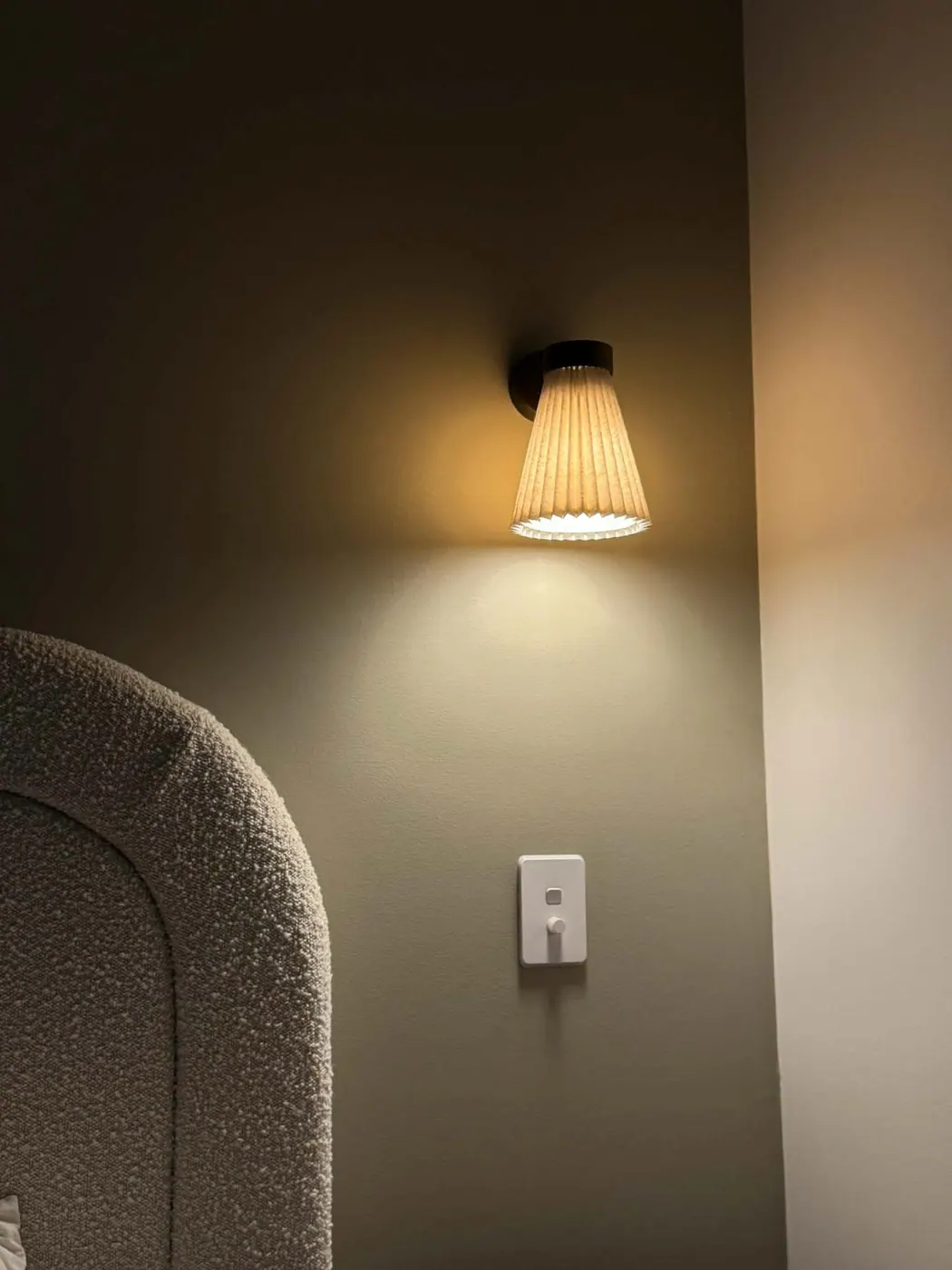
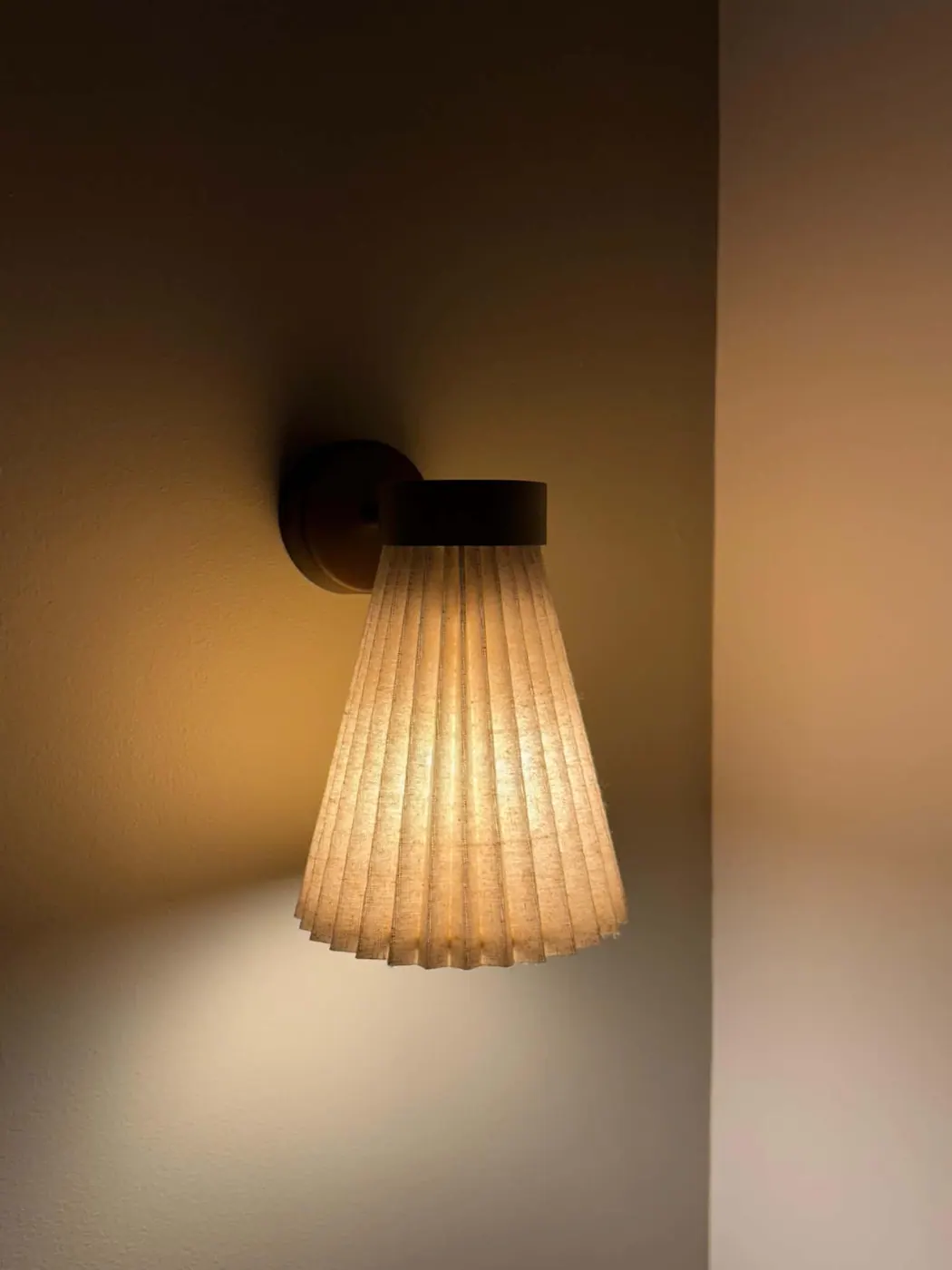
The sconces were installed with dimming so the level can be set to suit the time of night, and this is where LED catches people out more than anywhere else.
With old incandescent globes, dimming worked because you were simply reducing power to a filament. Any dimmer, any globe. LED doesn't work that way. The lamp has electronics in it, and it has to be a dimmable lamp in the first place, which not all of them are. Then the dimmer has to be one that suits LED, because a dimmer designed for the old loads often behaves badly with electronic ones.
When the two are mismatched you get a specific set of symptoms, and they're worth recognising because people usually blame the light: flickering at low levels, a faint buzz from the switch or the fitting, a lamp that won't dim below about half, or one that glows faintly when it's supposed to be off. None of that means the sconce is faulty. It means the dimmer and the lamp were never going to get along.
There's a load issue as well. Dimmers have a minimum load, and two small LED lamps may not draw enough for a dimmer built for a room full of incandescents to see them properly. So the honest advice is: decide you want dimming before the fittings are bought, and get the lamp and the dimmer specified together as a pair.
Why Sconces Beat Bedside Lamps
Practically, a wall sconce does something a lamp can't. It frees the whole surface of the bedside table, and because it's fixed at a chosen height it throws light down onto a book instead of across the room into the other person's face.
Mounting height is the decision that matters, and it's set by where the bedhead is and where you sit up to, not by what looks centred on the wall in daylight. Slightly too high and it lights the wall above you. Slightly too low and it's in your eye line. That has to be worked out with the bed in position, or at least with its dimensions known, which means it's a conversation before the wiring goes in.
The Stairwell Problem
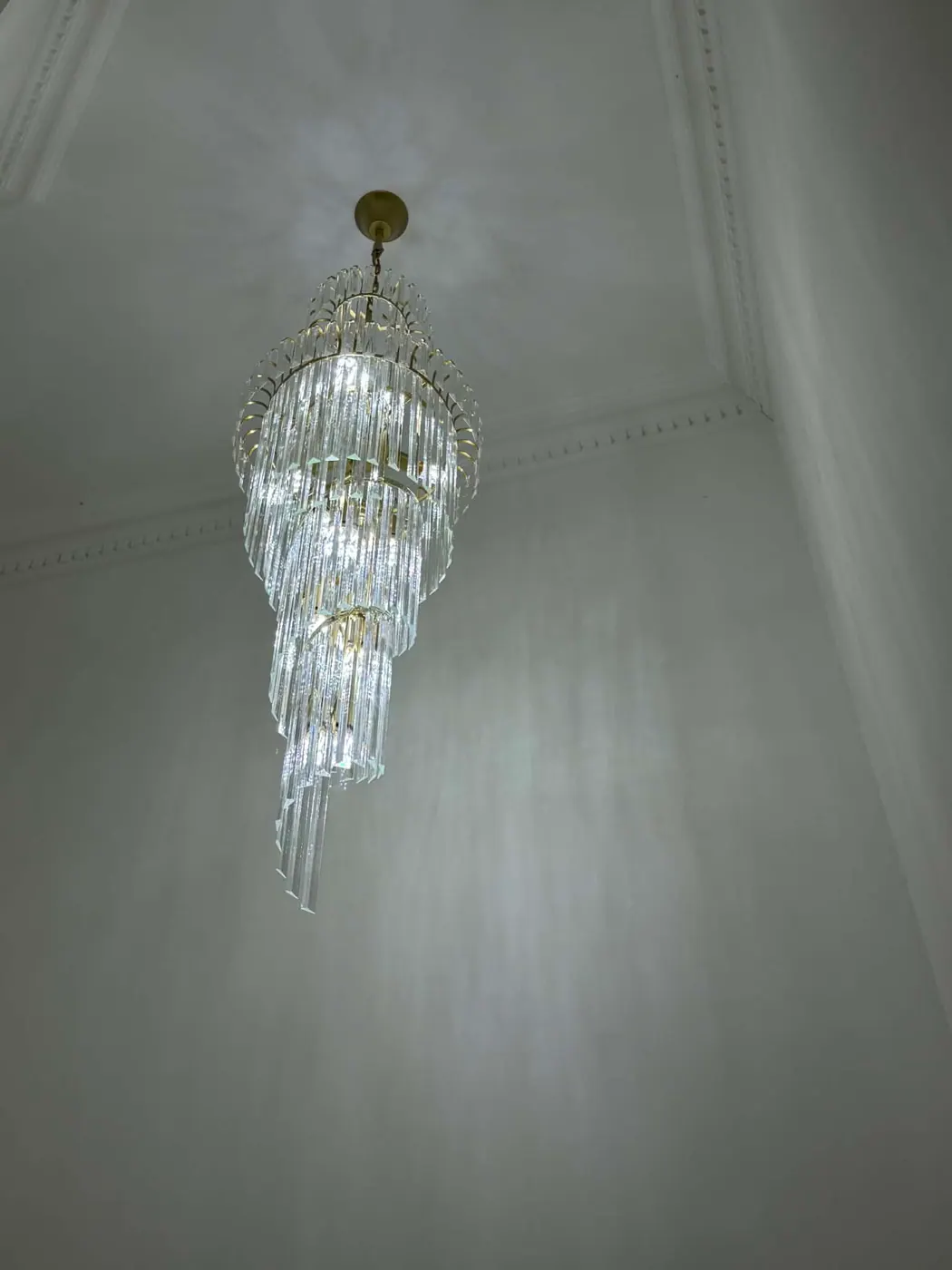
The chandelier was customer-supplied and went in the stairwell, which is the hardest place in a house to hang anything.
Two things make it difficult. The first is fixing. A chandelier is a real weight, and unlike a downlight it can't be carried by the ceiling lining. It needs a fixing into structure that will hold that load indefinitely, and the structure is wherever it happens to be rather than conveniently where the fitting is meant to hang. That sometimes means the mounting point is the thing that determines the exact position, not the plan.
The second is access, and it's the one nobody thinks about. You can't stand a ladder on a staircase. The floor under the fitting isn't level, it's a set of treads, so both the install and every future globe change need a proper working platform rather than someone balancing on the stairs with an extension pole. It's worth asking, before you buy a fitting for a void or a stairwell, how anyone is going to reach it in five years. Some fittings can be lowered on a winch for exactly this reason, and if yours can't then you want to know that now.
On Customer-Supplied Fittings
We're happy to install fittings you have bought, and often the piece you have chosen is the whole reason for the job. Two things make it go smoothly.
Send the details before install day rather than on it: the weight, the mounting arrangement, and whether the lamps are dimmable if dimming is wanted. And check the fitting is one that can legitimately be installed here, because electrical equipment sold for use in Australia has to meet Australian requirements, and an electrician can't fit something that doesn't.
If You're Buying Feature Lighting
Decide on dimming first, because it affects the lamp, the switch and the wiring, and retro-fitting it's more work than including it. For anything heavy or anything in a void or a stairwell, sort out how it gets installed and how it gets serviced before you buy it.
Feature fittings are usually the most expensive lights in a house and the ones people are most pleased with afterwards, which is a good reason to spend a bit of time on the boring questions first. There's more on our feature lighting page, and on what we do locally on our Redwood Park electrician page.