Why This Matters to You
Most camera systems are sold on the cameras. The number of megapixels, the night vision range, the app. In practice the thing that decides whether an install looks professional or looks like an afterthought is the cabling, and that's decided by the building rather than the kit.
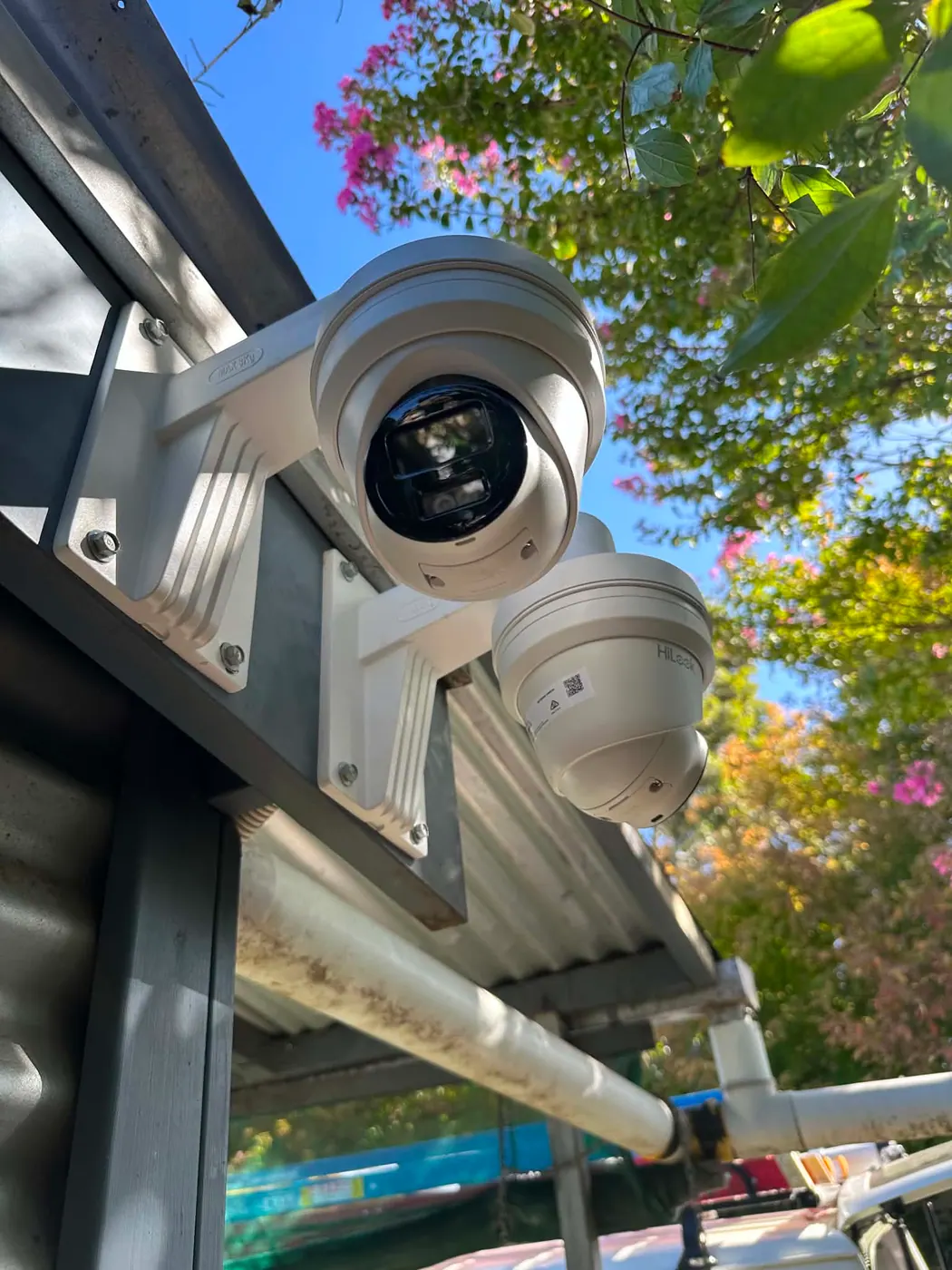
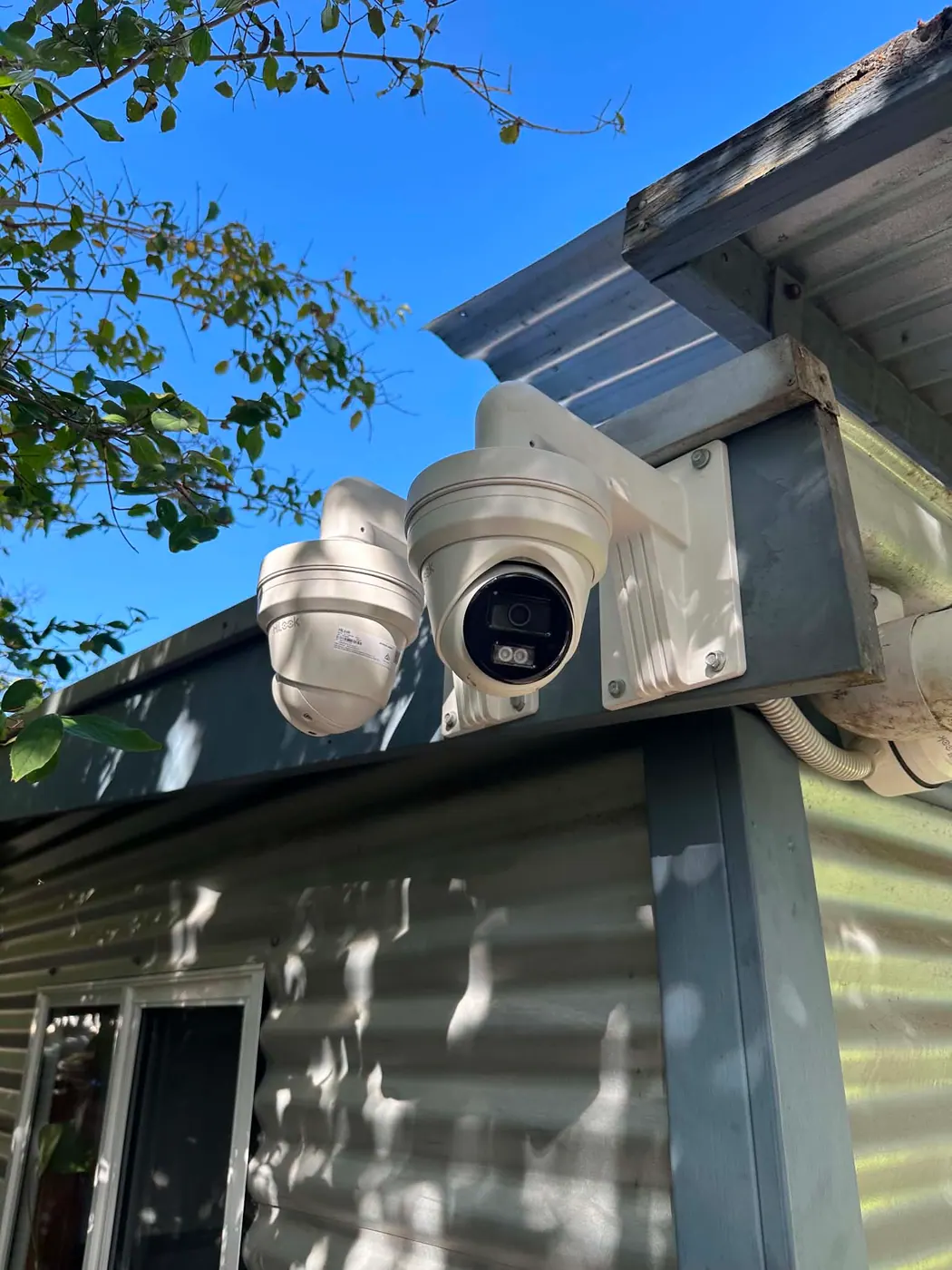
This job was for a business in Golden Grove. Seven cameras for full coverage around the premises, in a solid brick building, which meant there were no wall cavities to run anything in.
No Cavity Means No Easy Route
In a brick veneer building there's a cavity behind the internal lining, so a cable can be dropped down a wall and come out where you want it with nothing showing. Solid brick doesn't give you that. There's no gap to work in.
So every run has to be planned rather than improvised. That means working through the roof space where possible, out through the eaves, and using surface conduit where there's genuinely no other option, run along lines that already exist on the building so it reads as deliberate rather than added. The difference between a tidy install and an ugly one is almost entirely in these decisions, and they're much easier to get right before the first hole is drilled than after.
It also takes longer, which is worth knowing when you're comparing quotes. A cheaper quote on a solid brick building often means cable stapled across the brickwork by the shortest route.
What's Different About a Business
Cameras on a commercial site are doing a different job to cameras on a house. Nobody is there overnight, which is when most of what you want recorded happens, so coverage of the approaches and anywhere stock or vehicles sit matters more than coverage of the building itself.
There's usually more to cover, too. A business tends to have multiple entry points, a yard, a loading area and a car park rather than a front and back door, which is how a job gets to seven cameras rather than three. And because the footage may end up being used for an insurance claim or shown to police, image quality at the points that matter is worth more than camera count spread thinly.
Worth thinking through before install: who needs to be able to view it, from where, and whether that's only on site or from a phone as well. That decision changes what the recorder needs to be connected to.
Seven Cameras, and Where They Point
Full coverage doesn't mean a camera on every wall. It means the approaches are covered and the views overlap enough that there's no blind gap between them, particularly at the points where somebody would actually come onto the property.
Height matters in two directions. High enough that nobody can reach up and turn a camera away, but not so high that everything you record is the top of a head. A camera at second-storey height gives you excellent footage of somebody's shoulders and nothing you could identify them by.
Direction matters too, and not just for image quality. A camera aimed into the afternoon sun will give you a silhouette for two hours a day. And it's worth being considerate about where the field of view lands, because a camera that takes in a good portion of the neighbour's back yard tends to become a conversation you didn't want to have. Point them at your own property and the system does its job without creating a second problem.
The Recorder Needs Power and Somewhere to Live
The cameras themselves typically take power and data down the same cable, which keeps the outdoor side simple. The recorder is the part people don't plan for.
It needs a supply, it needs somewhere ventilated because it runs continuously and generates heat, and it needs to be somewhere reasonably secure. A recorder sitting in an obvious spot inside the front door is the first thing taken, along with everything it recorded.
Worth thinking about too: if the power goes off, the recording stops. If that matters to you, the recorder wants to be on a small uninterruptible supply so a brief outage, or somebody deliberately killing the power, doesn't create a gap.
If You're Getting Cameras Installed
Walk the site first and decide what you actually want to see. Approaches, entry points, and anywhere a vehicle, stock or equipment is left. That list drives the camera count, and the camera count drives the cabling, which is where the work actually is.
Then find out what your walls are. If the building is solid brick, expect the cabling to be a bigger part of the job than the cameras, and get someone who will tell you where the conduit is going to run before they start rather than after. We do this work for homes and small commercial sites across the north-east, and there's more on what we cover locally on our Golden Grove electrician page.